Untitled series of one actor in many roles
1848
|
Each print in this series portrays one of the most
popular kabuki actors of the day in
several different roles. The series is
not listed in Kuniyoshi by Basil William
Robinson (Victoria and Albert Museum, London, 1961). The prints are each about 14 by 10 inches
(36 by 25 centimeters), a size known as ôban. I am grateful to Robert Pryor for assisting
with this series. |
|
|
Title: The Colors of the Plum Blossom (Sono uraume hana no saishiki, 其裏梅花の彩色) Actor: Nakamura Utaemon
IV Roles: Shikama Takubei (鹿間宅兵衛), Yura Hyôgonosuke (由良兵庫の助), Ochanoko Debezô (お茶のこでべ蔵), Kumasaka Chôhan (熊坂長範), Shichibei Kagekiyo (七兵衛景清), Kiritake Budayû (切竹武太夫), Furuteya Hachirobei (古手屋八郎兵衛), Takagi Oriemon (高木折右衛門), the ferryman
(sendô) Tonbei (船頭頓兵衛), Ôtaka Tonomo (大高主殿), and Hyakushô Yasaku (百姓弥作) NOTE: The plum blossom (uraume)
refers to the mon of Utaemon’s
Narikomaya acting guild. |
|
|
Another state of the above design |
|
|
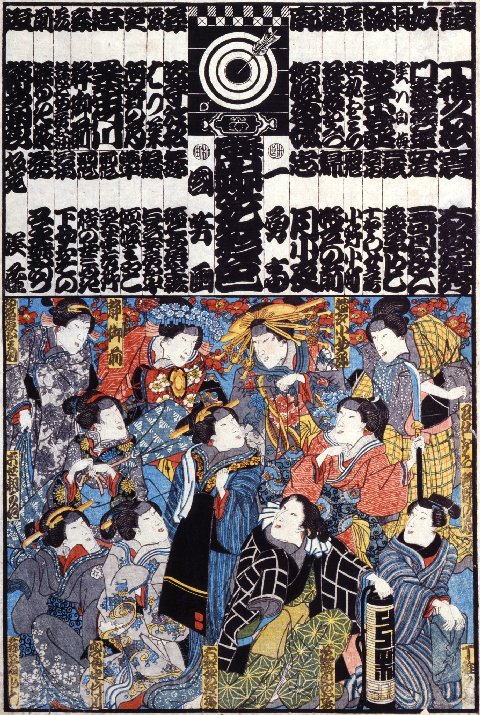
Title: The Colors of the Katsumi Flower (wild rice) (Katsumigusabana
no saishiki, 勝見艸花の彩色) Actor: Bandô Shûka I Roles: The servant (meshitsukai) Ohatsu (召仕おはつ), Ano no Tsubone (阿野の局, the
apprentice (detchi) Hisamatsu (丁稚久松), Hakata
Kojorô (博多小女郎), Hanakatsumi Ohide (花勝見のお秀), Yamatoya Ohide (大和屋の於秀), Shizuka Gozen (静御前), the female
servant (Ôkujochu) Takekawa (奥女中竹川), the daughter
(musume) Omitsu (娘おみつ), the blind
musician (goze) Asagao
(ごぜ朝かほ), and the geisha
Kashiku (芸者かしく) NOTE: Wild rice (katsumi)
refers to the hanakatsumi mon of Shuka’s Yamatoya
acting guild. |
|
|
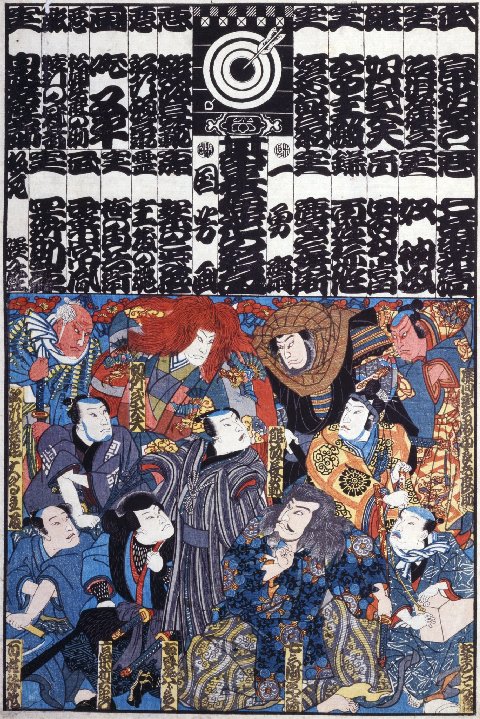
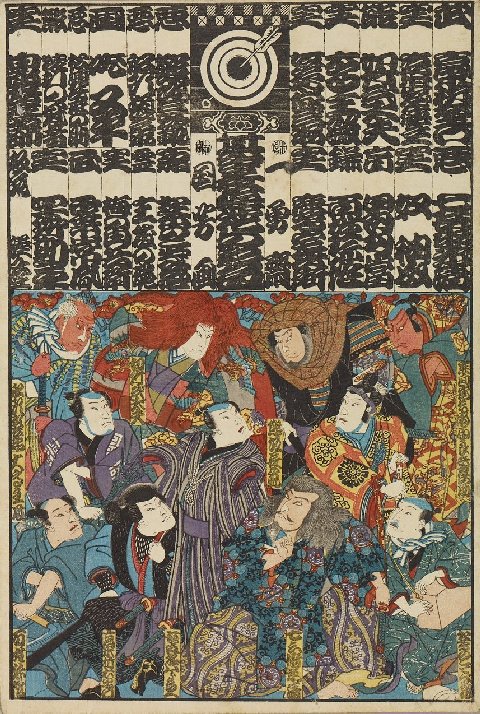
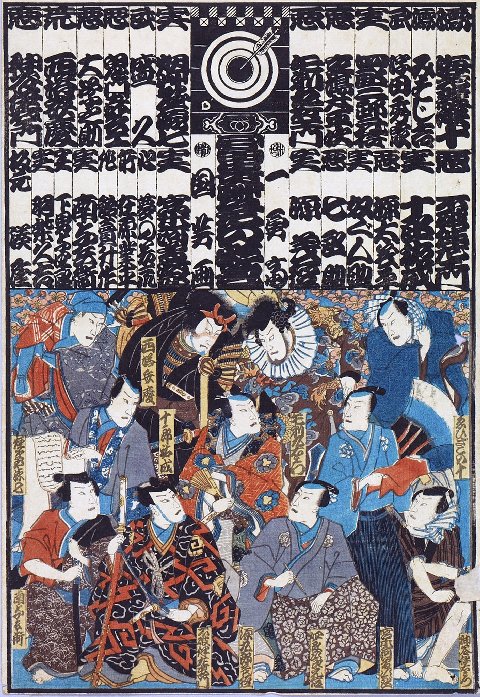
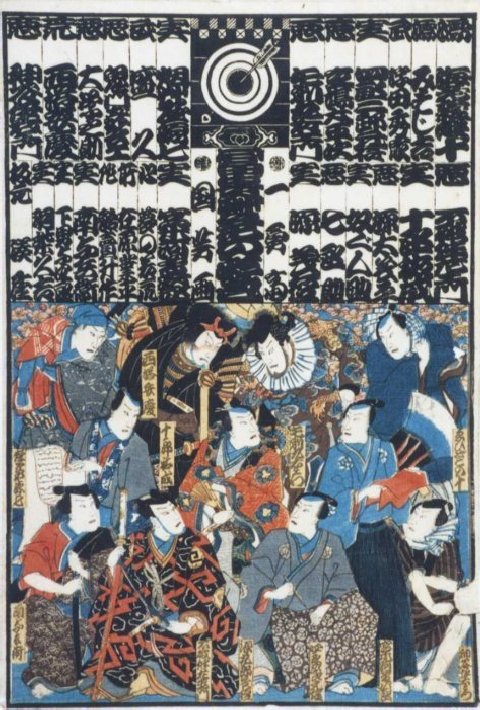
Title: The Colors of the Peony (Fūkigusabana
no saishiki, 冨貴艸花の彩色) Actor: Ichikawa
Danjûrô VIII Roles: Ebizako no Ju (ゑひざこの十), Kamiya Iemon (神谷伊右衛門), Miyagi Asojiro (宮木阿曽次郎), Kezori Kuemon (毛剃九右衛門), Shirojirô Motonobu (四郎次郎元信), Genkurô Yoshitsune (源九郎義経), Saitô Benkei (西塔弁慶), Jûrô Sukenari (十郎祐成), Fuwa Banzaemon (不破伴左衛門), the tobacco
seller (tabakoya) Genshichi
(煙草屋源七), and Nan
Yohei (南与兵衛) NOTE: The Danjûrô Naritaya guild’s various mon
do not include a flower, so Kuniyoshi has allocated him with the peony, which
was considered the most noble of flowers. |
|
|
Another state of the above design |
|
|
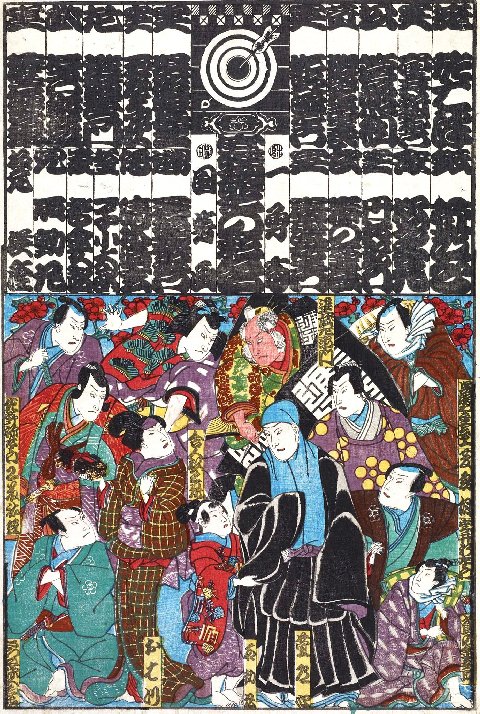
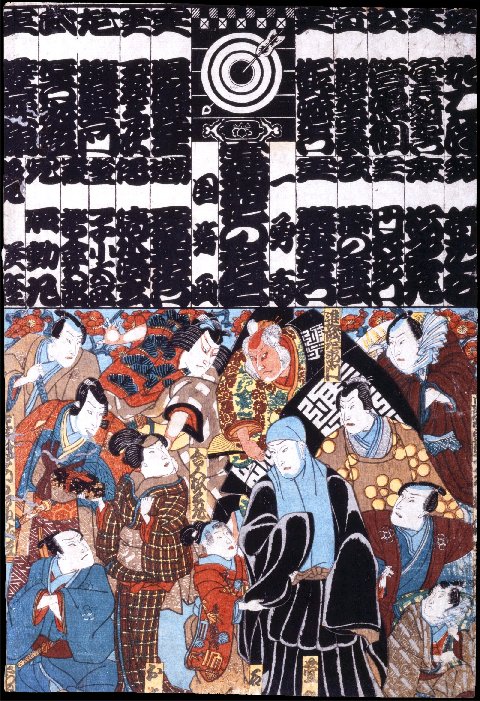
Title: The Colors of the Winter
Chrysanthemum (Kangikubana no saishiki, 寒菊花の彩色) Actor: Sawamura Sôjûrô
V Roles: Gofukuya
Jubei (呉服や重兵エ), Kan Shôjô (菅丞相), Shigenoi Shinzaemon (重ノ井新左衛門), the fireman (tobi) Kingorô (鳶の金五郎), Shindô Saemon進󠄁藤左衛門), priest Karukaya Doshin
(萱道心), Toneri Matsuomaru
(舎人松王丸), Ohatsu (おはつ), Sano Genzaemon (佐野源左衛門), Kudô Suketsune (工藤祐経), Satsuma Gengobei (さつま源五兵衛), and the child actor Sawamura Genpei II as Ishidô Maru (石童丸) NOTE: Winter chrysanthemum (kangiku, 寒菊) is a pun on ring suspended chrysanthemum (kangiku,
釻菊), the mon of Sawamura’s Kinokuniya
guild:
|
|
|
Another state of the above design with
different colors and lacking censors’ seals |
|
|
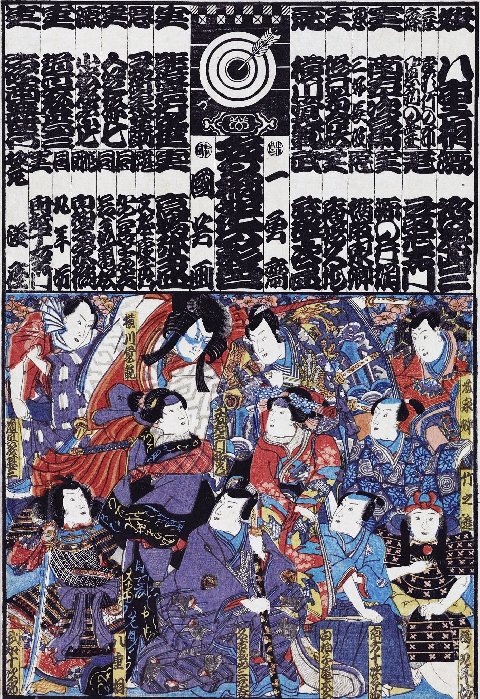
Title: The Colors of the Orange Blossom (Na no kikka
no saishiki, 名の橘花の彩色) Actor: Ichimura Uzaemon XII Roles: Lord Fujizumi (藤泉卿), Takenoshin (竹之進), Tachibana no
Kuhenbô (橘の九平坊), Nanpô Jûjibei (南方十次兵衛), 白拍子亀松, Kudo Saemon Suketsune (工藤左衛門祐経), Nagoya Sanza
Motoharu (名古屋山三元春), Yokogawa Kakuhan (横川覚範), [princess] Yaegaki (八重垣), Dôguya (tool shop) Jinzô (道具屋甚三), and Takechi Jûjirô (武知十次郎) NOTE: The tachibana orange is
the mon of Uzaemon’s
Tachibanaya guild. 藤泉卿 can be read as Lord
Fujizumi (Fujizumi
Kyô), but it can also be read as Tôsenkyô. |

CLICK HERE
TO RETURN TO MAIN PAGE
|
|