Stories of Wise Women and Faithful Wives,
Part II
|
|
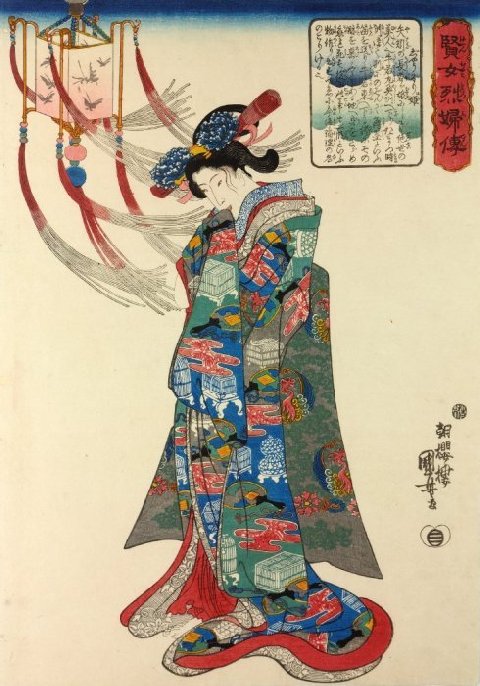
Title: Izutsu-hime (井筒姫) Description: Izutsu-hime
seated by a brazier Robinson: S20.11 |
|
|
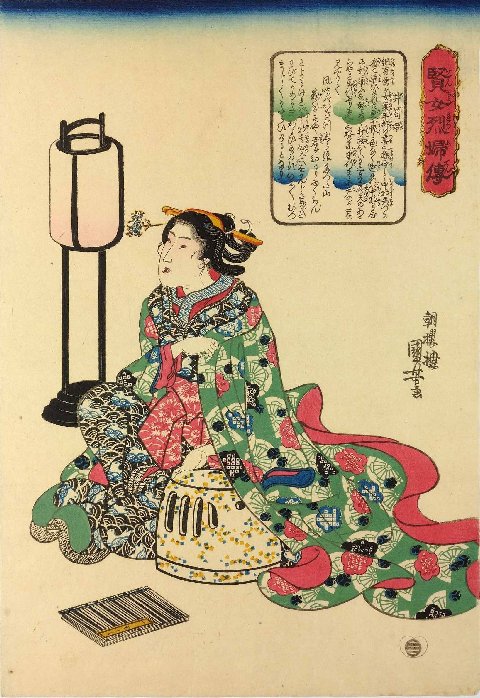
Title: Jôruri-hime (じょうるり姫) Description: Jôruri-hime standing
under a lamp bedecked with streamers Robinson: S20.12 |
|
|
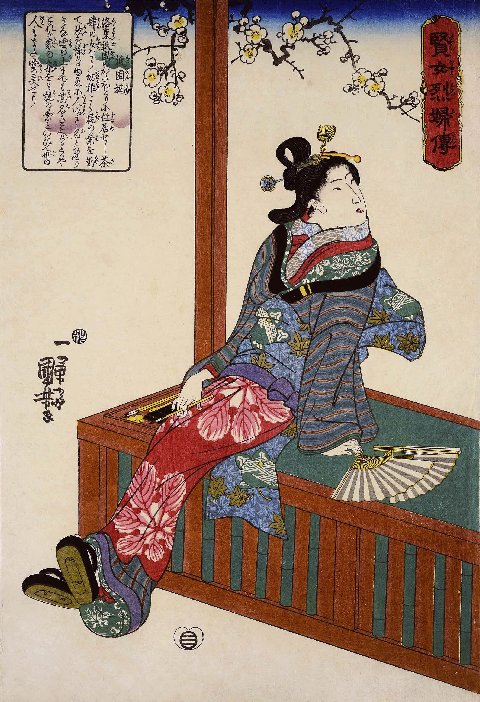
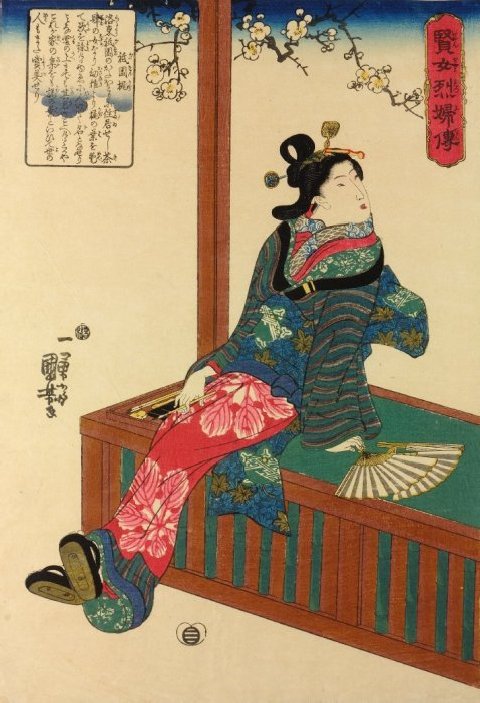
Title: Kaji of Gion
(Gion Kaji, 祇園梶) Description: Kaji of Gion
seated on a bench with her fan and writing brushes Robinson: S20.13 |
|
|
Another state of the above design |
|
|
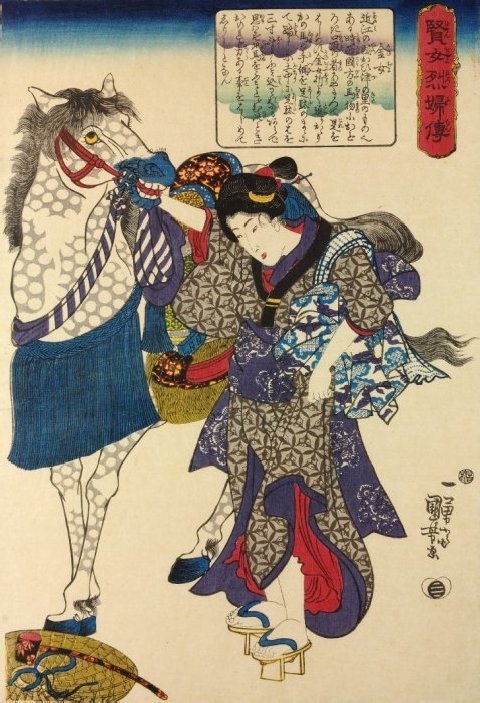
Title: Kane-jo (金女) Description: Strong
woman Kane-jo holding a horse Robinson: S20.14 |
|
|
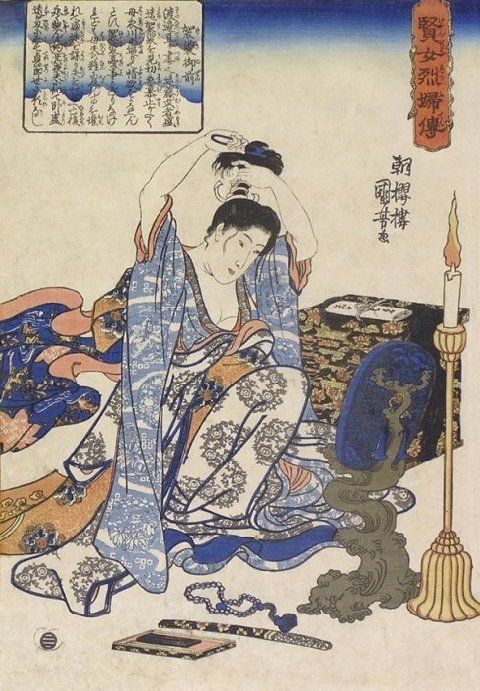
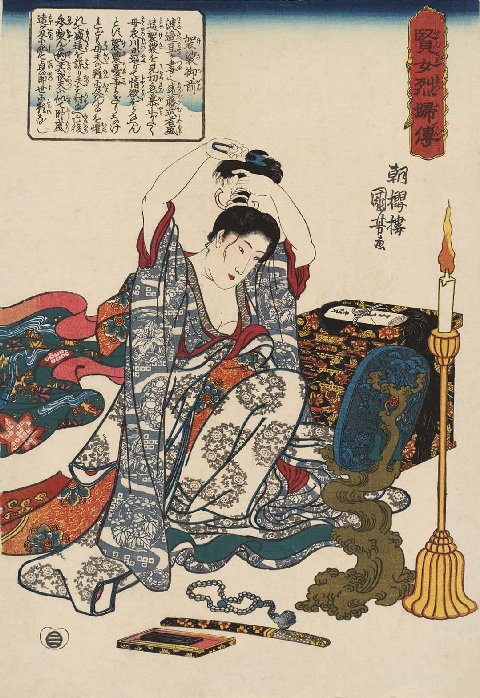
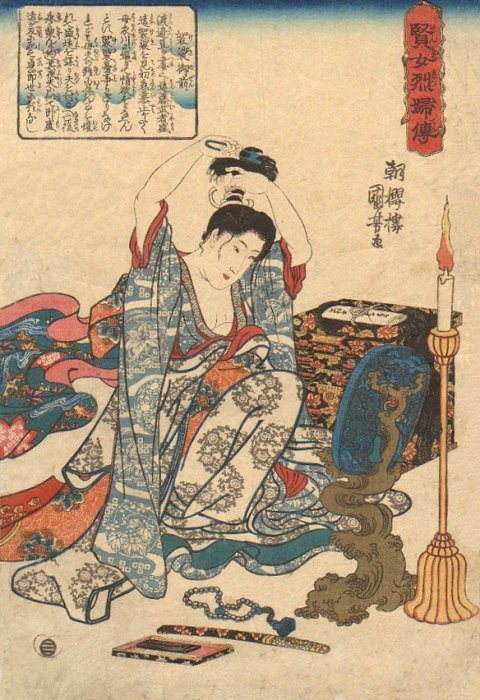
Title: Kesa Gozen (袈裟御前) Description: Lady Kesa
Gozen cutting her hair so that she may impersonate her husband and be killed
in his place Robinson: S20.15 |
|
|
Another state of the above design |
|
|
Another state of the above design |
|
|
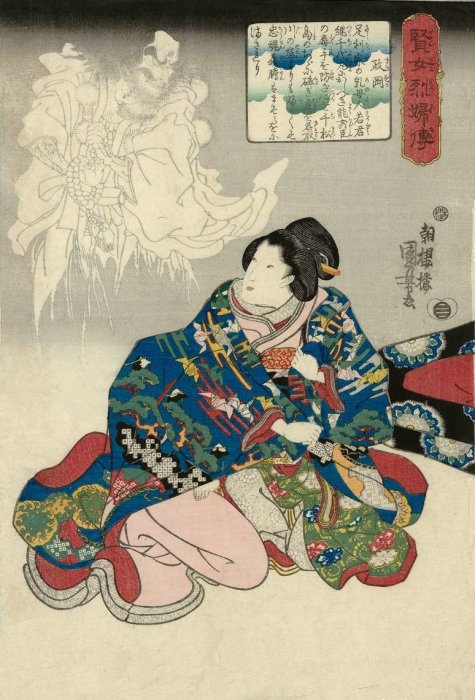
Title: Masaoka (政岡) Description: Masaoka shielding
Tsugichiyo Maru under her clothes from the apparition of an old warrior-monk Robinson: S20.16 |
|
|
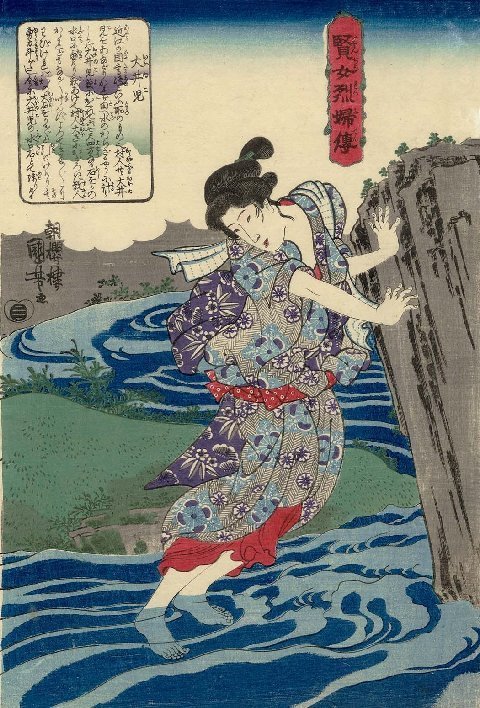
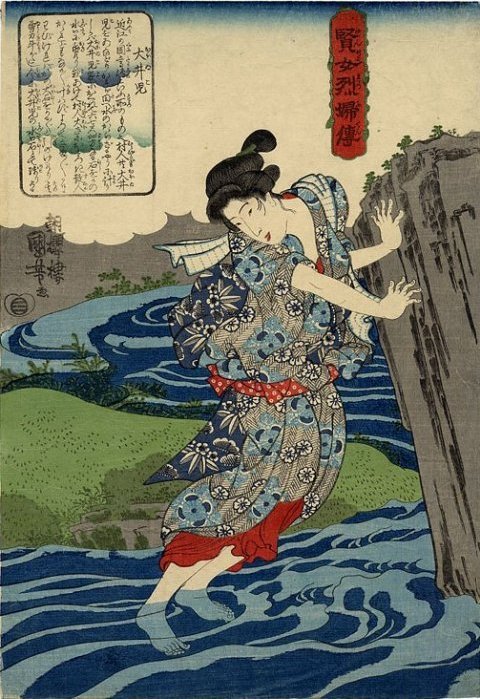
Title: Ôiko (大井児) Description: Ôiko damming
a stream with a huge rock Robinson: S20.17 |
|
|
Another state without any purple |
|
|
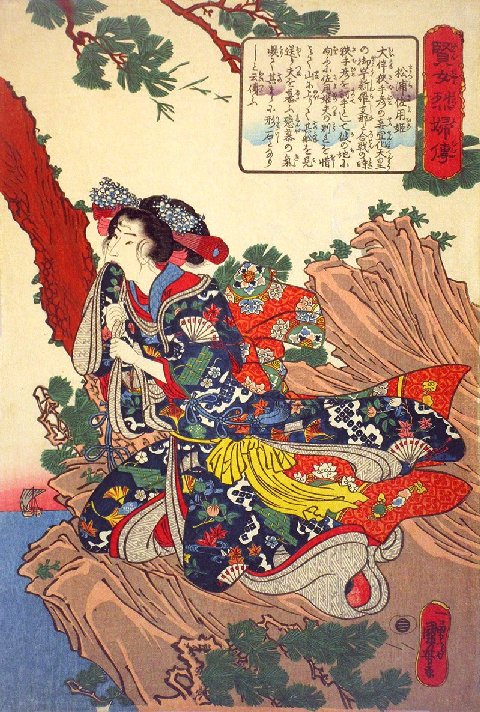
Title: Princess Sayo
at Matsu-ura (Matsu-ura Sayo-hime, 松裏佐用姫) Description: Sayo-hime at
Matsu-ura in Robinson: S20.18 |
|
|
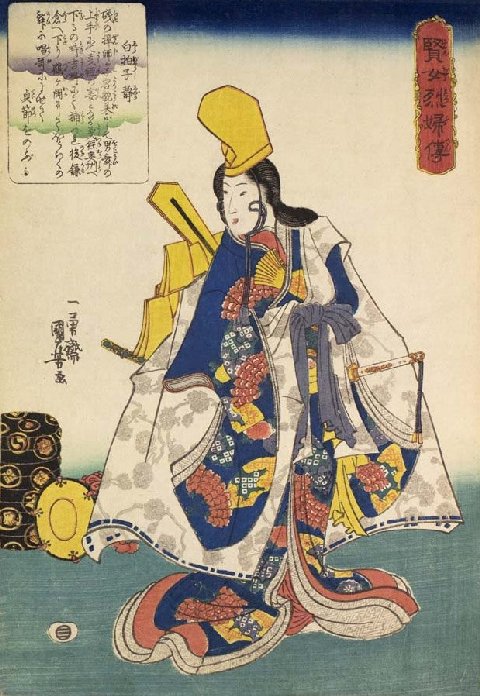
Title: Shirabyôshi
Shizuka (白拍子静) Description: Shizuka Gozen
wearing the full dress of a shirabyôshi,
in which she danced before Yoritomo at Tsuru-ga-oka Robinson: S20.19 |
|
|
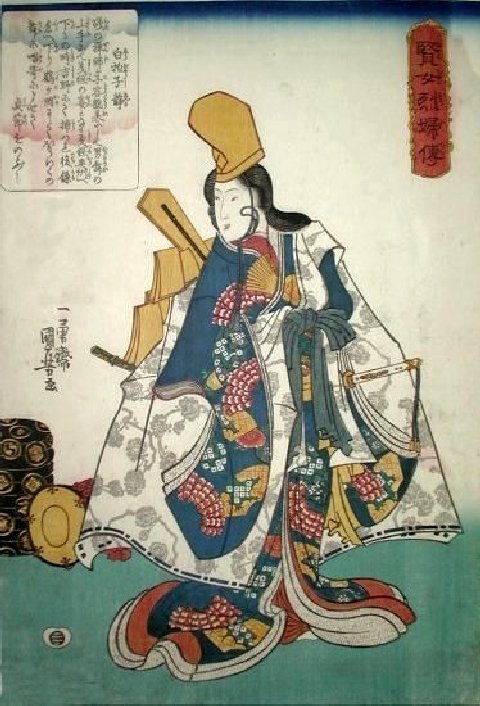
Another state of the above design without any purple |
|
|
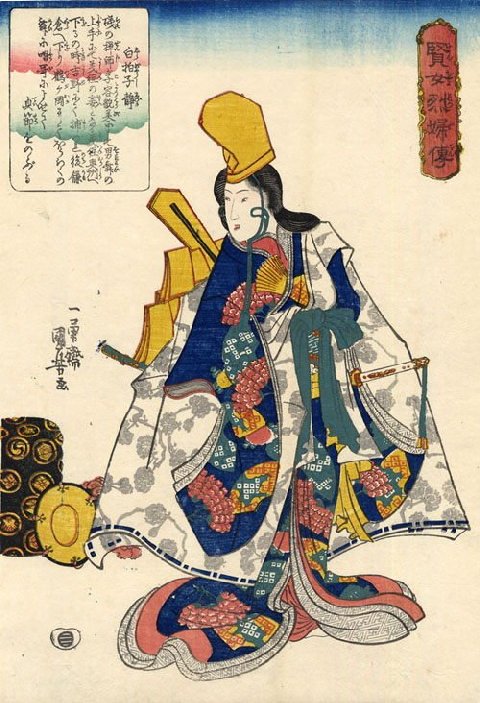
Another state without a ground |
|
|
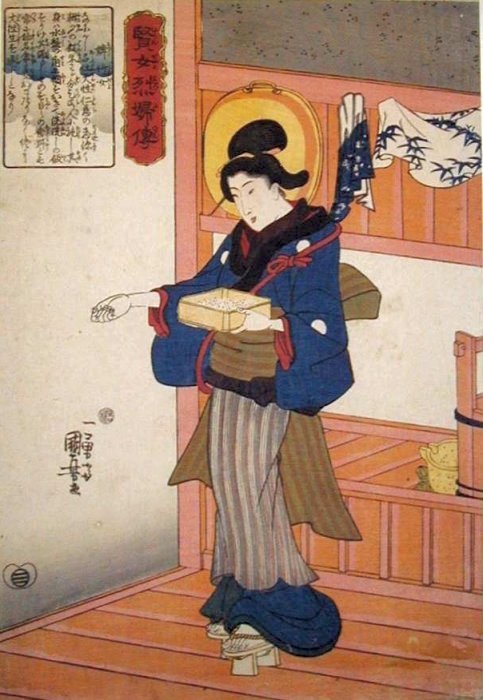
Title: The Maid
Take-jo (Kokuji Take-jo, 嬶竹女) Description: Take-jo
(Otake Dainichi Nyorai) sprinkling grain for birds Robinson: S20.20 Note the halo formed by a hanging pan around the head of this
servant, who is in fact a divine being |
|
|
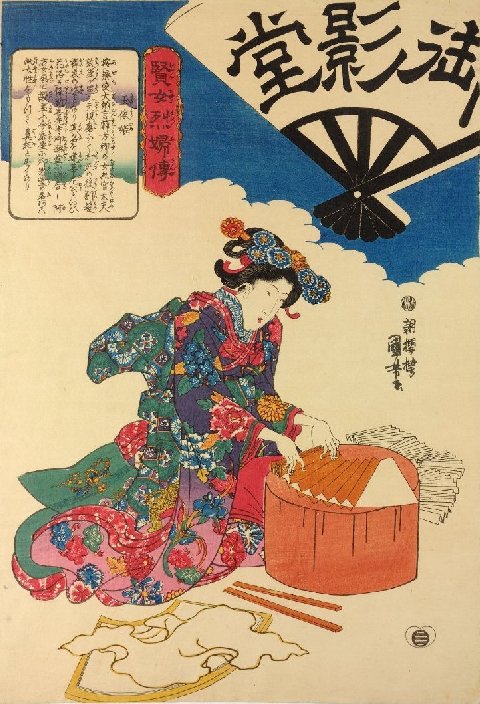
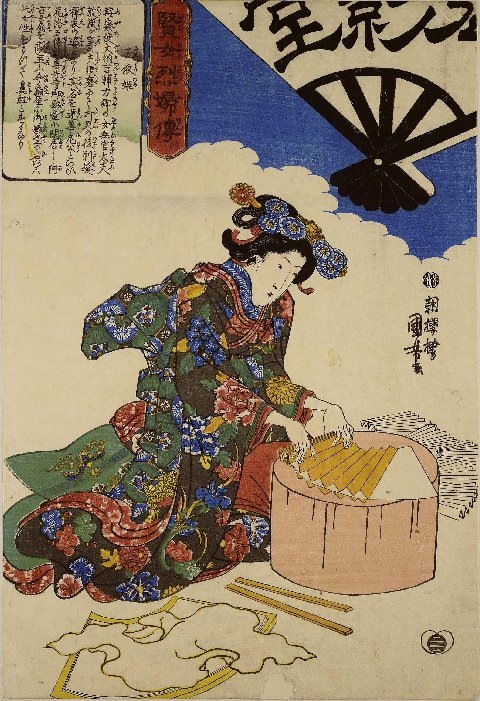
Title: Princess
Tamaori (Tamaori-hime, 玉依姫) Description: Tammayori-hime
(usually written Tamaori-hime) making fans in retirement after the death of
her husband, Atsumori Robinson: S20.21 |
|
|
Another state of the above design with a simplified kimono
design |
|
|
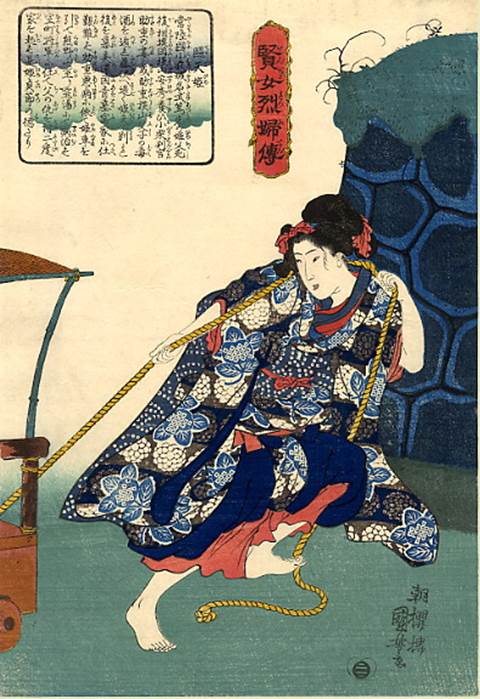
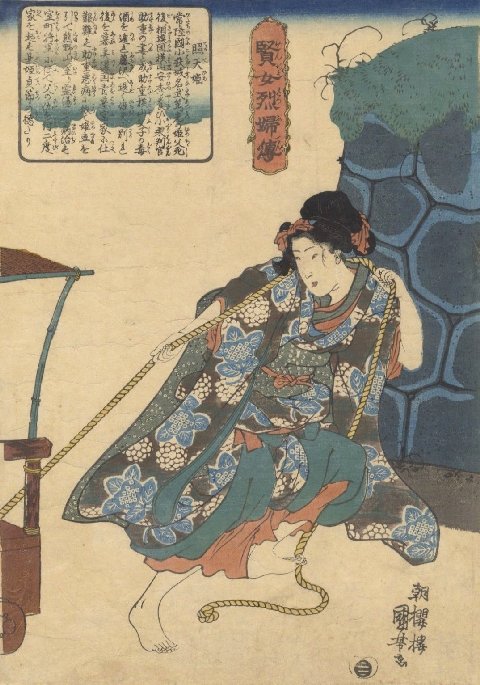
Title: Princess
Terute (Terute-hime, 照天姫) Description: Princess
Terute pulling her crippled husband on a cart Robinson: S20.22 |
|
|
Another state with a blue band on top and no ground |
|
“Robinson” refers to listing in Kuniyoshi: The Warrior-Prints by Basil William Robinson (Cornell University Press, Ithaca, NY, 1982) and its privately published supplement.
|