Human-interest Views of the
Fifty-three Stations of the Tôkaidô
(Tôkaidô gofusan eki
shishuku meisho, 東海道五十三次人物志)
Publisher: Ebi-ya Rinnosuke (海老屋 林之助)
1849
|
This series consisting of an unknown number of designs and has prominent human figures engaged in daily activities against a landscape representing one of the stations of the Tôkaidô. It predates Hiroshige’s similar Jimbutsu Tôkaidô. The prints have censor’s seals and signatures compatible with a date of 1849. However, the signatures on the drawings indicate that they were created about 1841-1842. This series is not listed in Kuniyoshi by Basil William Robinson (Victoria and Albert Museum, London, 1961). The prints are each about 10 by 14 inches (25 by 36 centimeters), a size known as ôban. |
|
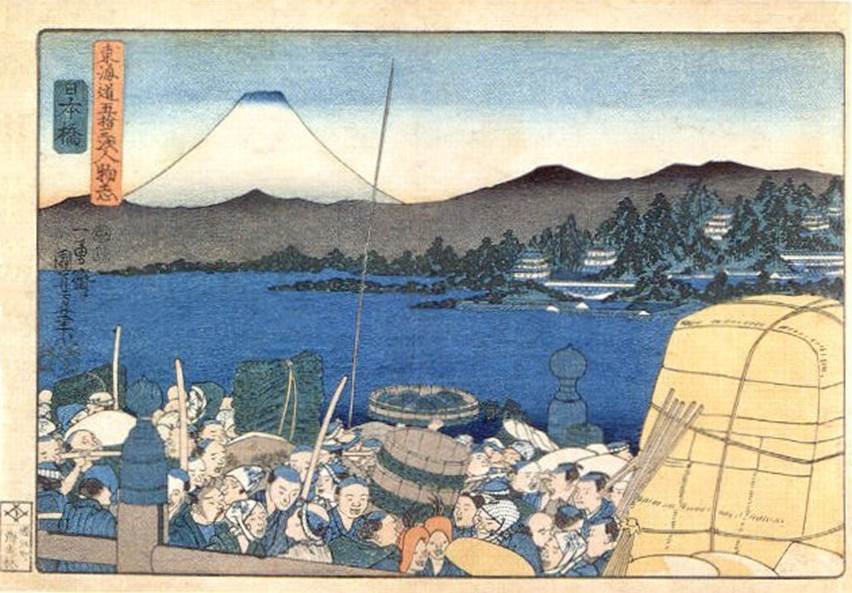
Number: 1 Station: Nihombashi (日本橋) Scene: Crowds on Nihombashi (bridge) |
|
Number: 2 Station: Shinagawa (品川) Scene: NOTE: This drawing was
never published as a woodblock print. |
|
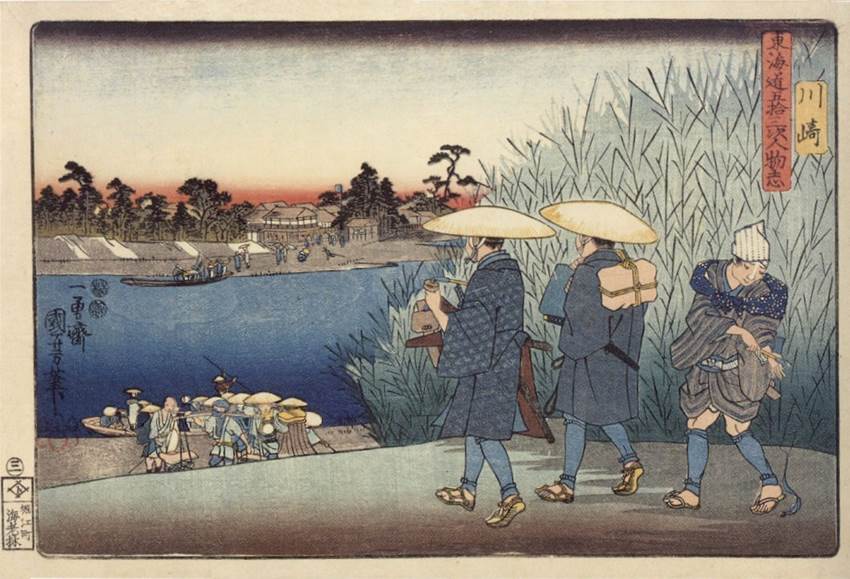
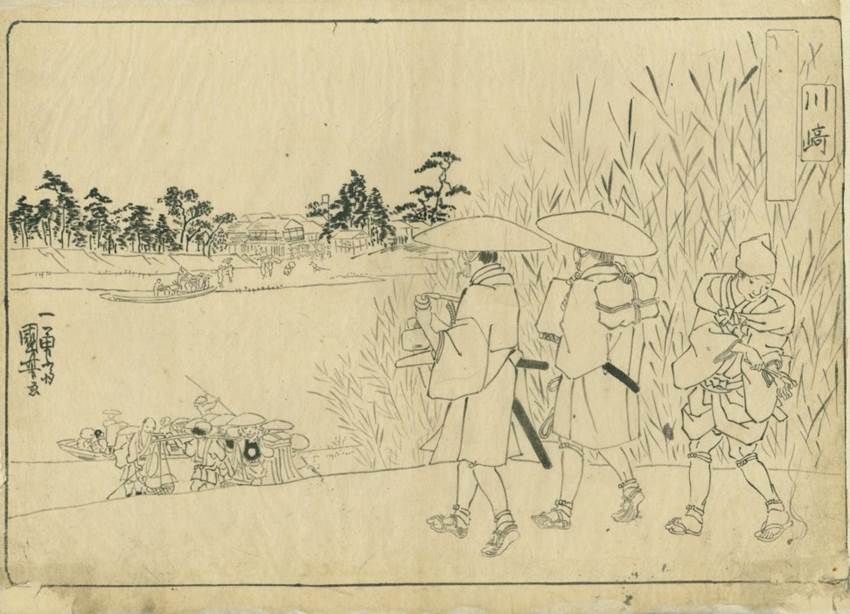
Number: 3 Station: Scene: Travelers at
a river-crossing |
|
This drawing for the above print is courtesy of Jeffrey Pollard. |
|
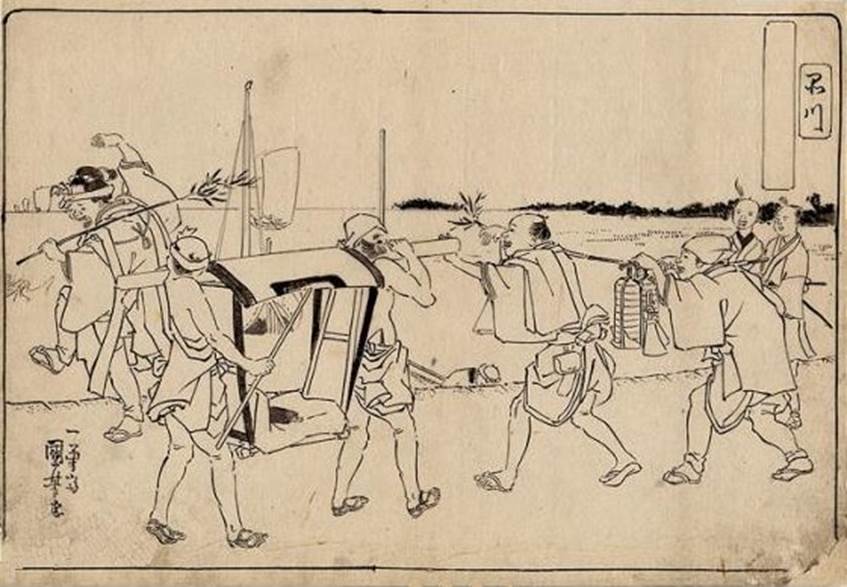
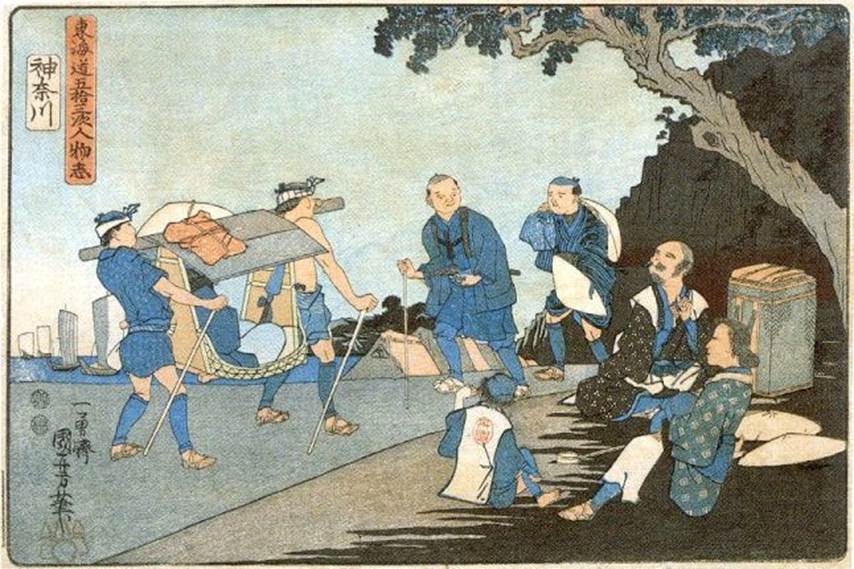
Number: 4 Station: Kanagawa (神奈川) Scene: Bearers
carrying a traveler in a palanquin |
|
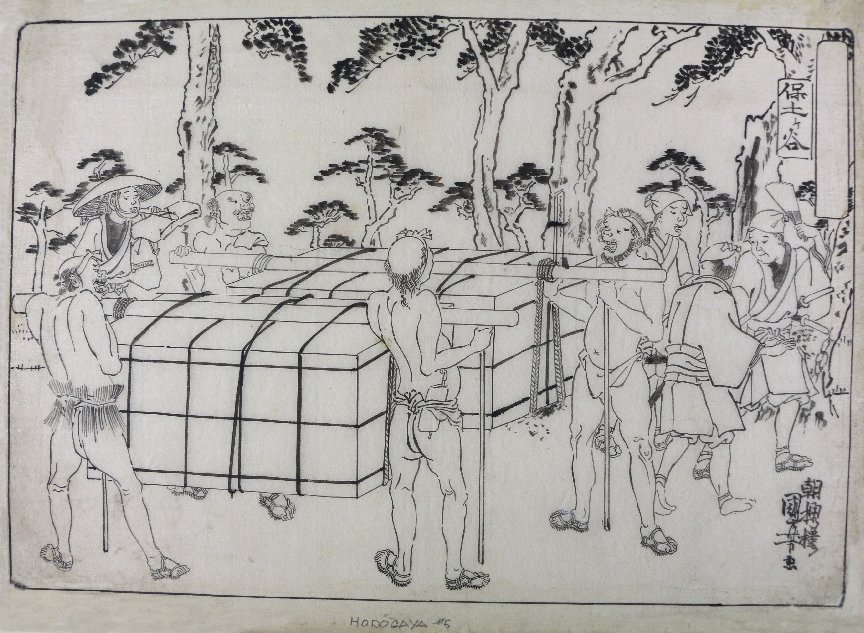
Number: 5 Station: Hodogaya (保土谷) Scene: Bearers with large
boxes secured to carrying poles with rope I am grateful to Jeffrey Pollard fot this
drawing. |
|
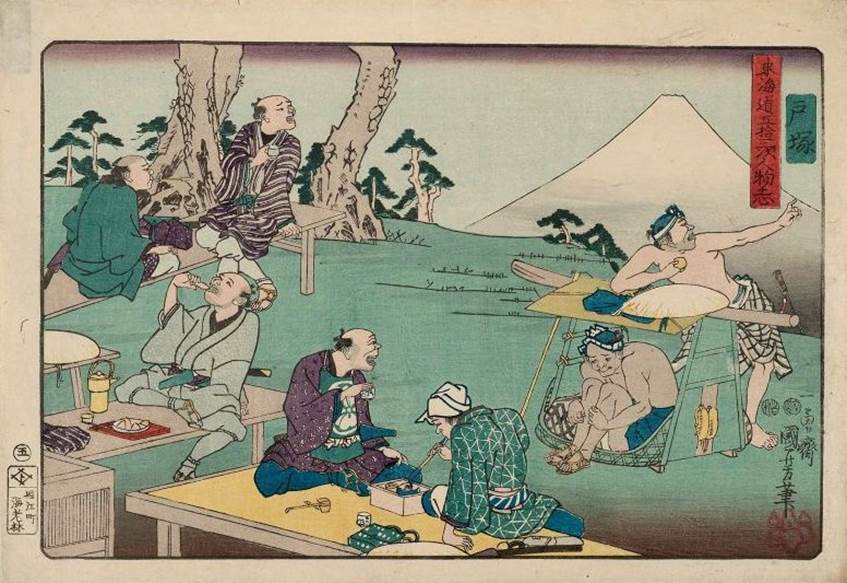
Number: 6 Station: Totsuka (戸塚) Scene: Travelers
eating and drinking I am grateful to Ward Pieters for locating this image. |
|
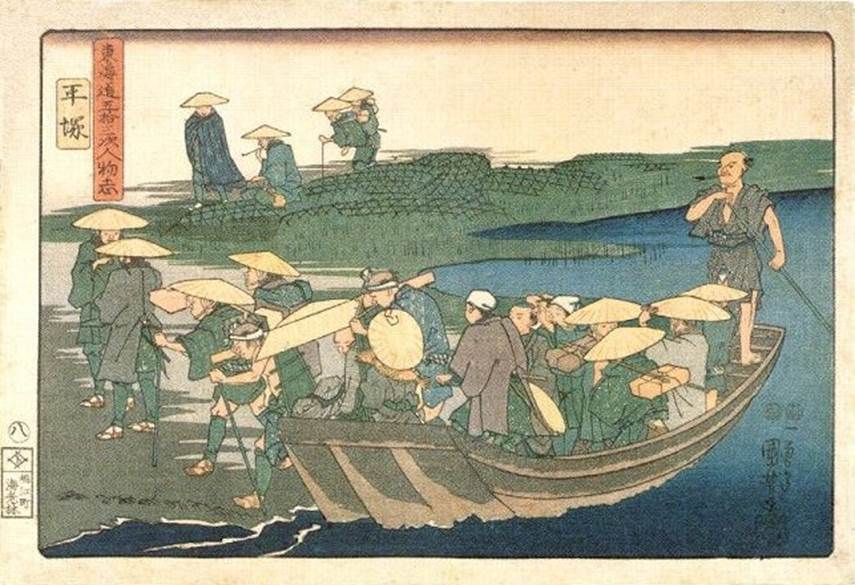
Number: 8 Station: Scene: Travelers
disembarking from a ferry |
|
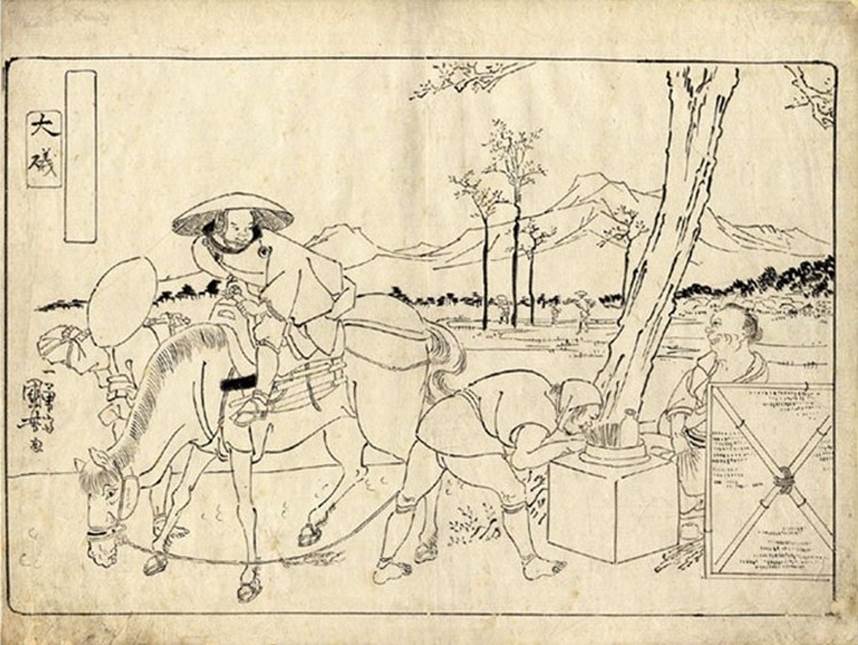
Number: 9 Station: Oiso (大磯) Scene: Drawing of a
traveler on horseback stopping to see roadside vendors |
|
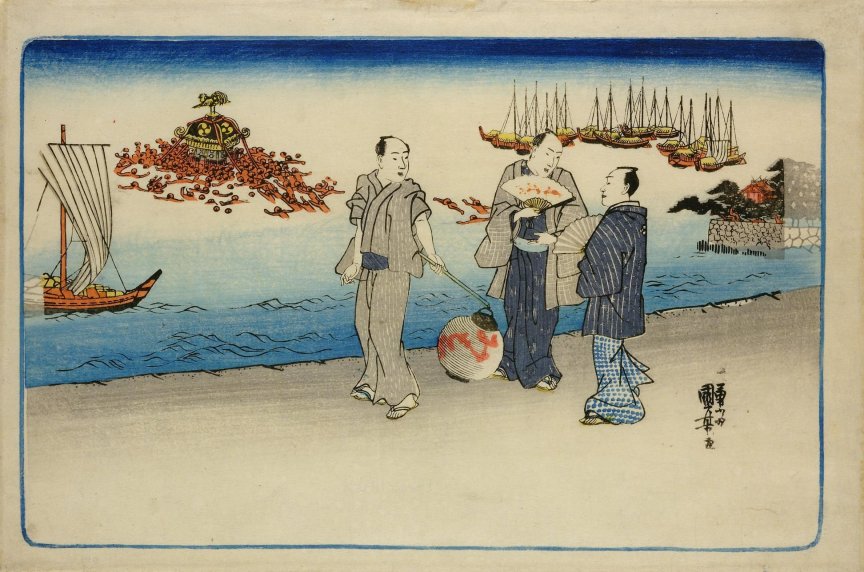
The subject, general style, and border with
rounded corners suggest that this is related to the above series. The c. 1841-1842 signature is similar to
those on the original drawings, some of which were not publishes with the
rest of the series in 1849. This may
be a later printing made from a previously unpublished drawing for this
series. I am grateful to Paul Steier
for the image. |
CLICK HERE TO RETURN TO MAIN PAGE
|
|