Miscellaneous Fan Prints of Women
Part I
|
An
uchiwa is
a non-folding fan consisting of paper attached to a bamboo frame. These prints, which were intended to be
glued onto uchiwa,
are called uchiwa-e.
Six series of uchiwa-e of women are listed as numbers 41,
50, 99, 212, 213, and 219 in Kuniyoshi
by Basil William Robinson (Victoria and Albert Museum, London, 1961). |
|
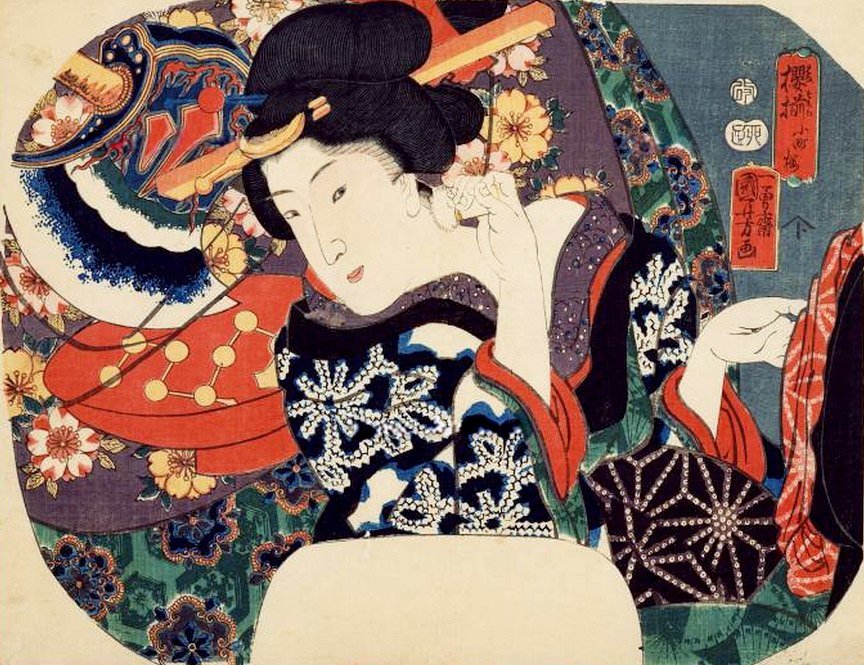
Series: A Collection
of Cherries (Sakurazoroi,
桜揃) Robinson: Not listed Title: Komachi
Cherry (Komachizakura, 小町桜) Description: Date: 1st
month of 1855 Publisher: Enshu-ya Matabei NOTE: The print mitate
of play Tsumoru koi yuki
no seki no to (The Barrier Gate, 積恋雪関扉). I am grateful to Robert Pryor for this
image. |
|
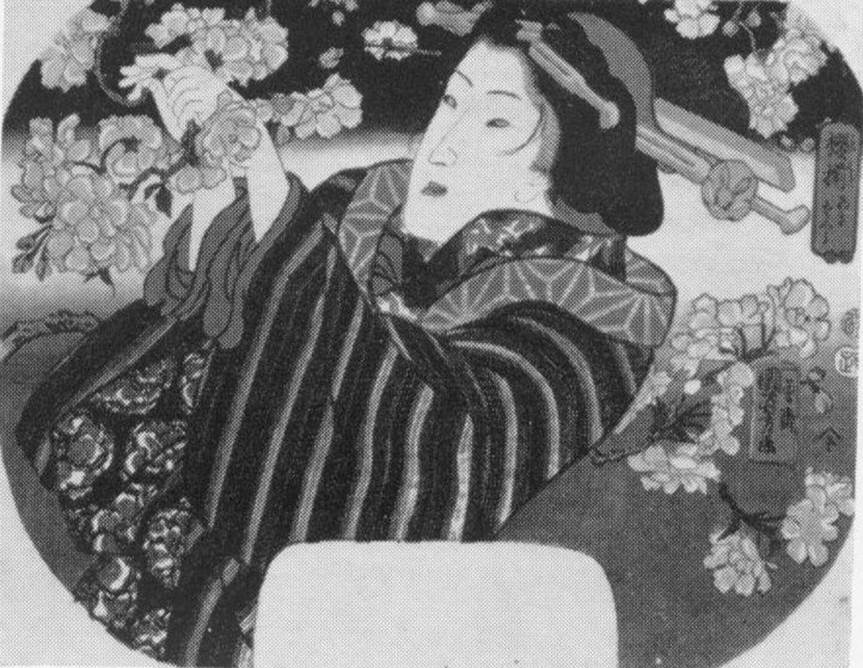
Series: A Collection
of Cherries (Sakurazoroi,
桜揃) Robinson: Not listed Title: Morning
Cherry Description: Beauty with
cherry blossoms Date: 1st
month of 1855 Publisher: Enshu-ya Matabei |
|
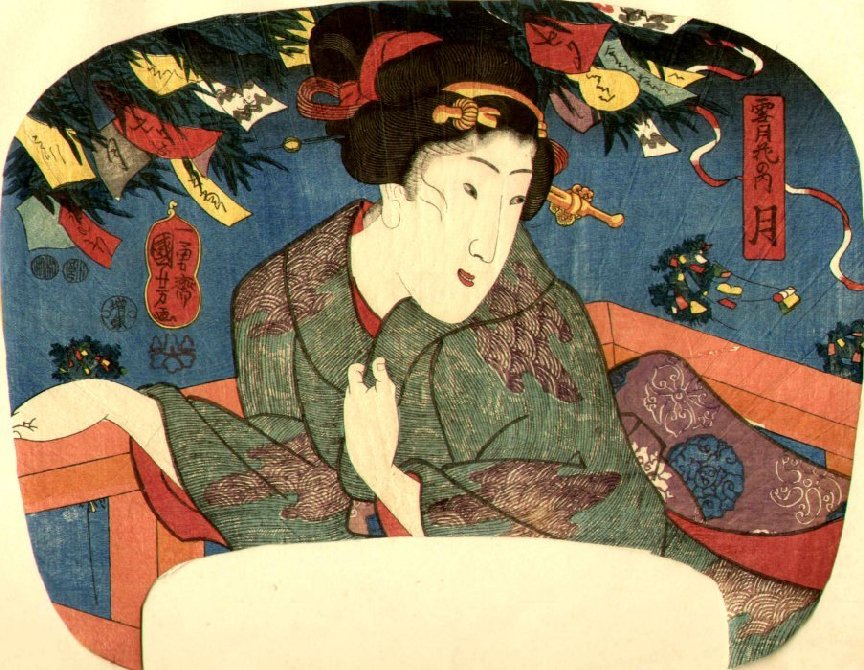
Series: Snow, Moon,
and Flowers (Setsugekkwa no uchi, 雪月花の内) Robinson: 213 Title: Moon (月) Description: Woman on a viewing platform at
the Tanabata Festival Date: 1847-1850
(censors Mera and Murata) Publisher: Masuda-ya Ginjirô Image courtesy of Richard Illing |
|
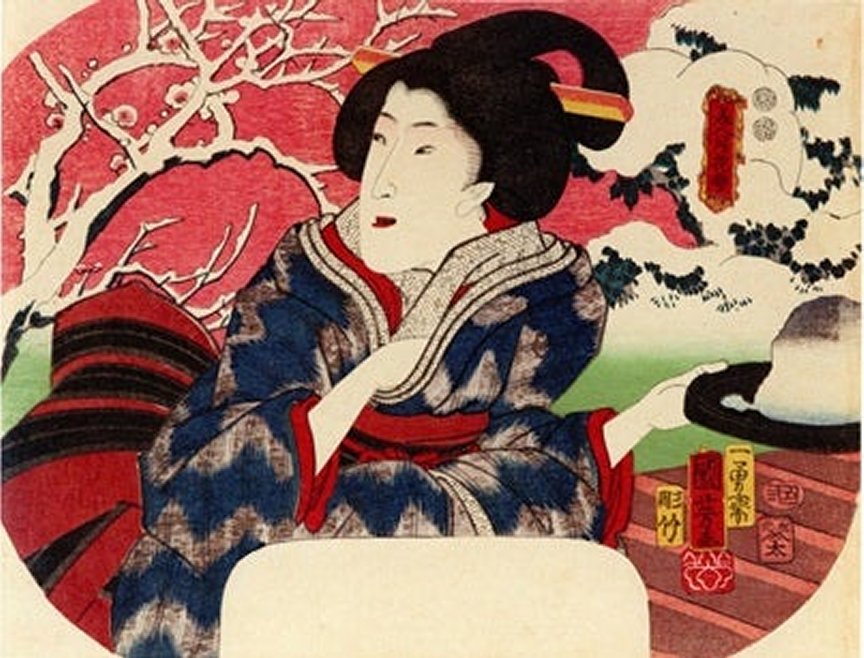
Series: Beauties,
Moon, Flowers, and Snow (Bijin gekkasetsu, 美人月花雪) Robinson: Not listed Title: Snow Description: Lady in
waiting with a tray of snow Date: 2nd
month of 1853 Publisher: Hanmoto ta (板元 太) I am grateful to Robert Pryor for this image. |
|
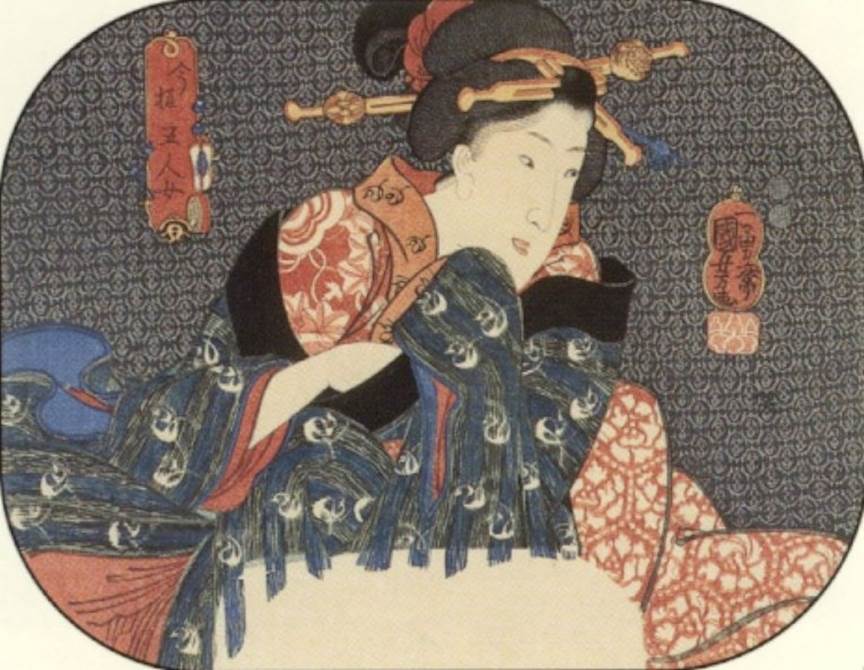
Series: Five Modern
Women (Imayô gonin no onna, 今様五人女) Robinson: not listed Title: None Description: A courtesan Date: 1850-1852 Publisher: Hanmoto ta (板元 太) |
|
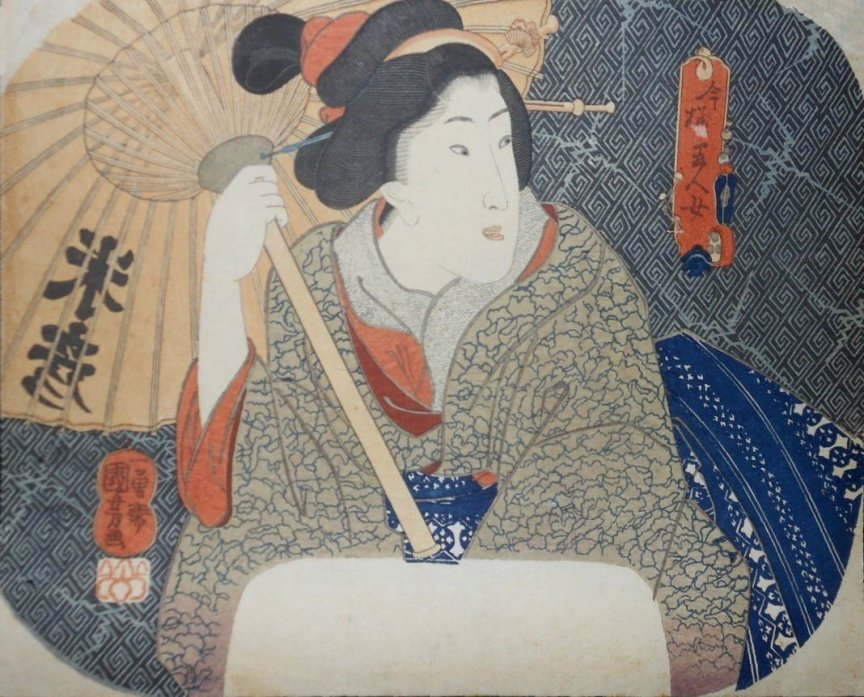
Robinson: not listed Title: None Description: A beauty with an umbrella Date: 1850-1852 Publisher: Hanmoto ta (板元 太) |
|
Series: Eight Views
of the Eastern Capital (Tôto hakkei, 東都八景) Robinson: Not listed Title: Evening Glow
at Description: Date: 1842-1846
(censor Watanabe Shôemon) Publisher: Enshû-ya Matabei |
|
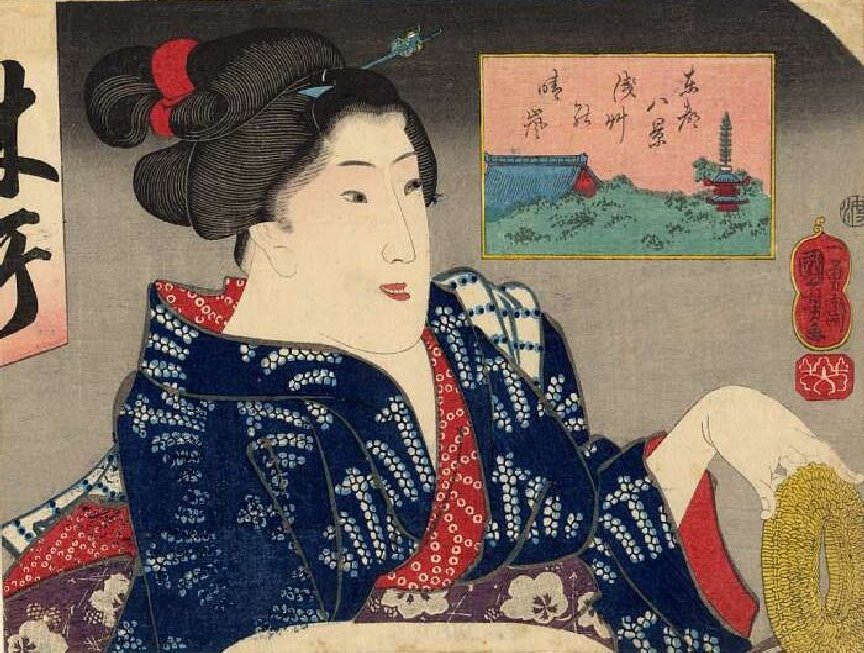
Series: Eight Views
of the Eastern Capital (Tôto hakkei, 東都八景) Robinson: Not listed Title: Sundown (Asakusa no seiran) Description: Probably a
seller from a shop at the Kinryuzan, which is
partly seen Date: 1842-1846
(censor Watanabe Shôemon) Publisher: No seal |
|
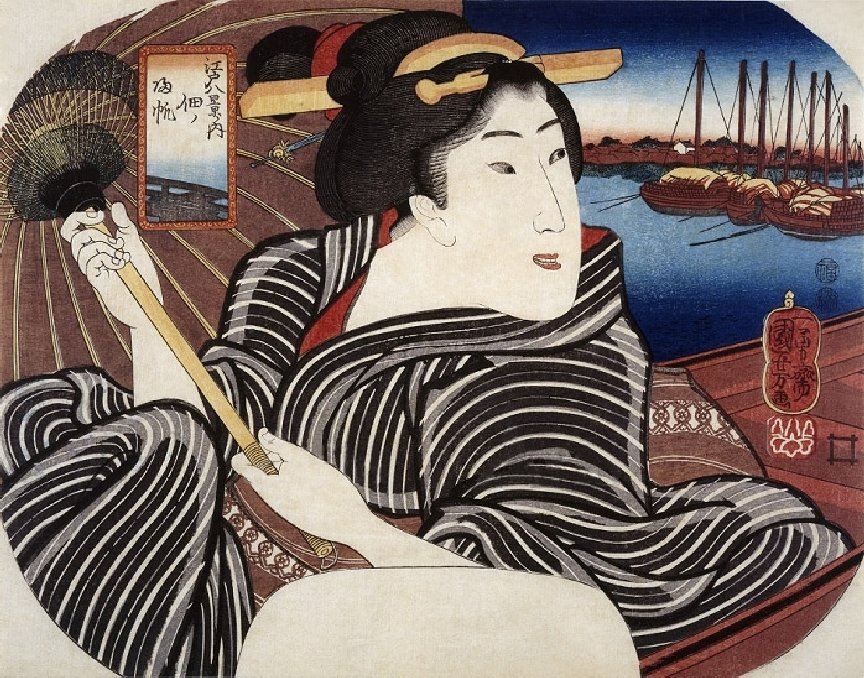
Series: Eight Views
of Edo (Edo no hakkei no uchi,
江戸八景内) Robinson: Not listed Title: Returning
Sails at Tsukuda (Tsukuda no kihan, 佃ノ帰帆) Description: Woman in a
boat holding an open umbrella Date: 1849-1851
(censors Fuku and Muramatsu) Publisher: Sano-ya Kihei I am grateful to
Robert Pryor for this image. |
|
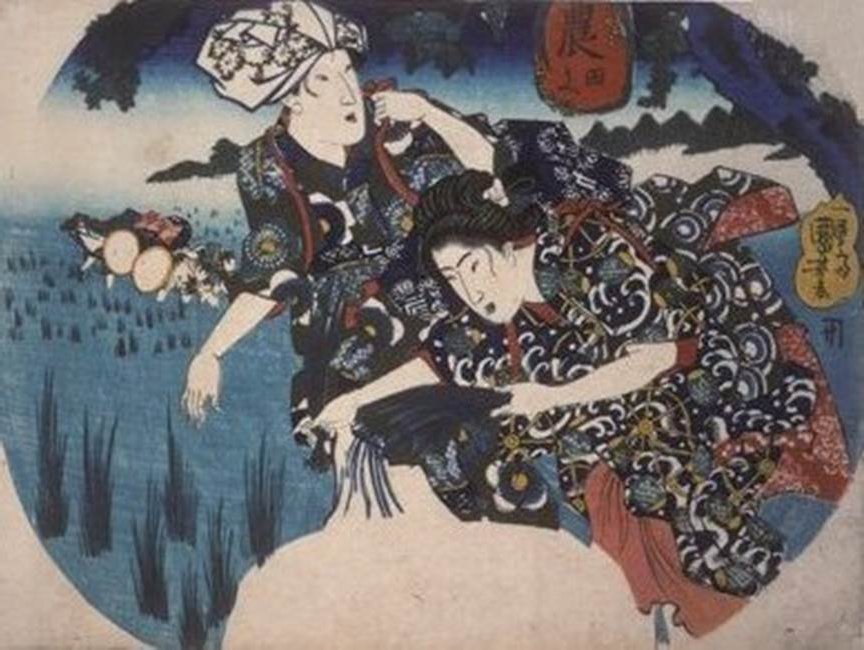
Title: Agriculture,
in the Rice Paddies (Nô, ta-ue, 農 田うへ) Description: Women
transplanting rice seedlings Date: Publisher: Suruga-ya Sukujirô |
|
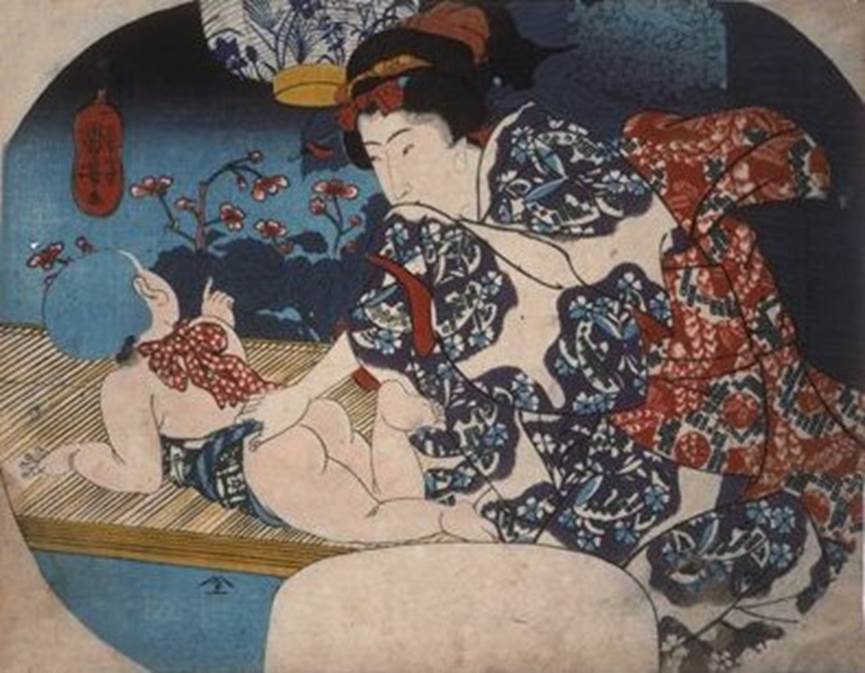
Title: None Description: Mother and
child Date: 1843-1847 Publisher: Ise-ya Sôemon |
|
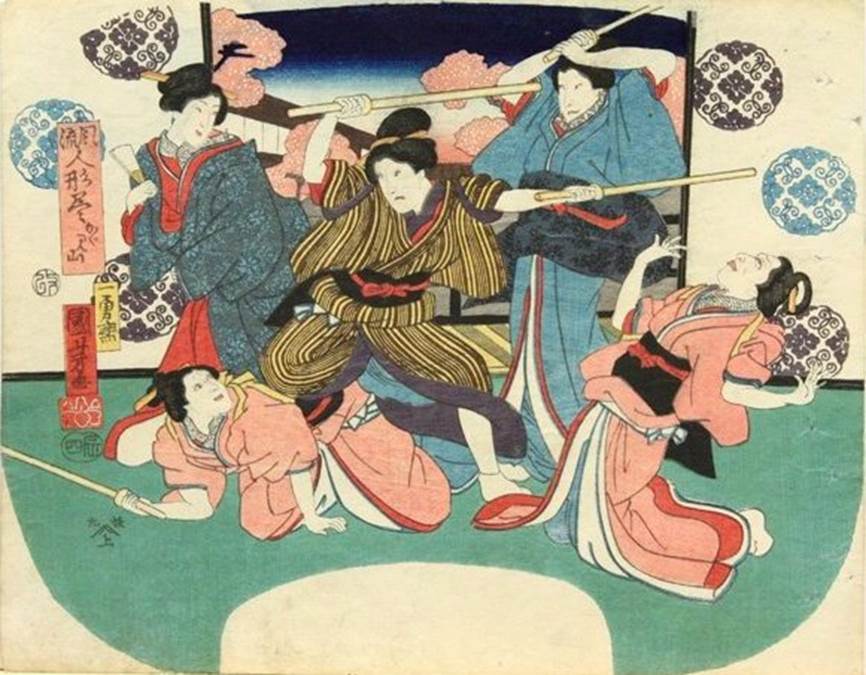
Title: Fashionable Living Dolls (Furyu ningyo, 風流人形) Description: A group of
carved “dolls” displayed at Date: 4th
month of 1856 Publisher: Ise-ya Sôemon |
|
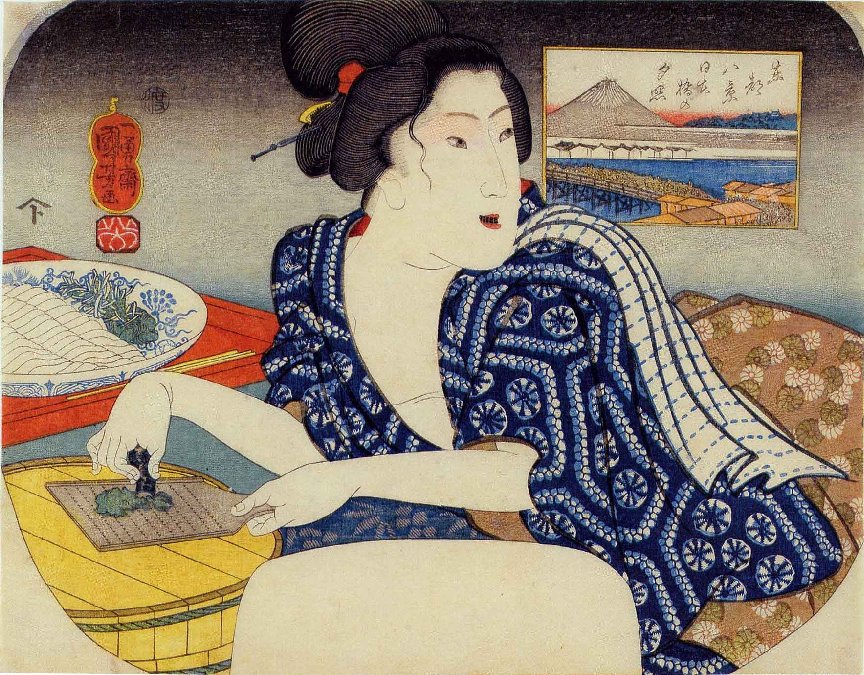
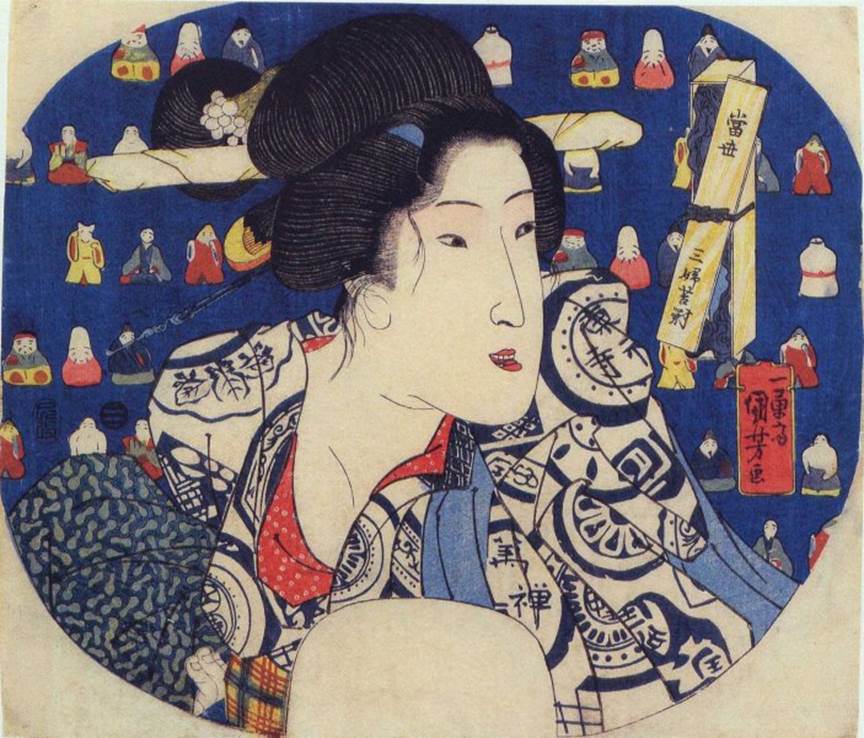
Series: Three
Hardships of Modern Women (當世三婦苦 対 Tôsei sanpukutsui) Robinson: Not listed Description: After the
bath Date: 1833 Publisher: Iba-ya Senzaburô |
|
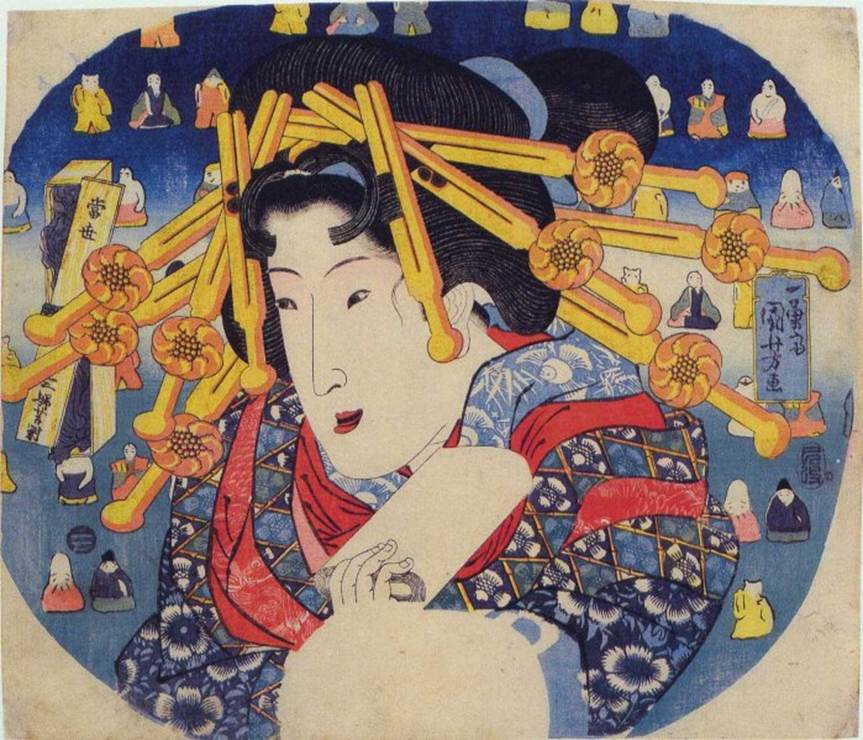
Series: Three
Hardships of Modern Women (當世三婦苦 対 Tôsei sanpukutsui) Robinson: Not listed Description: A courtesan Date: 1833 Publisher: Iba-ya Senzaburô |
|
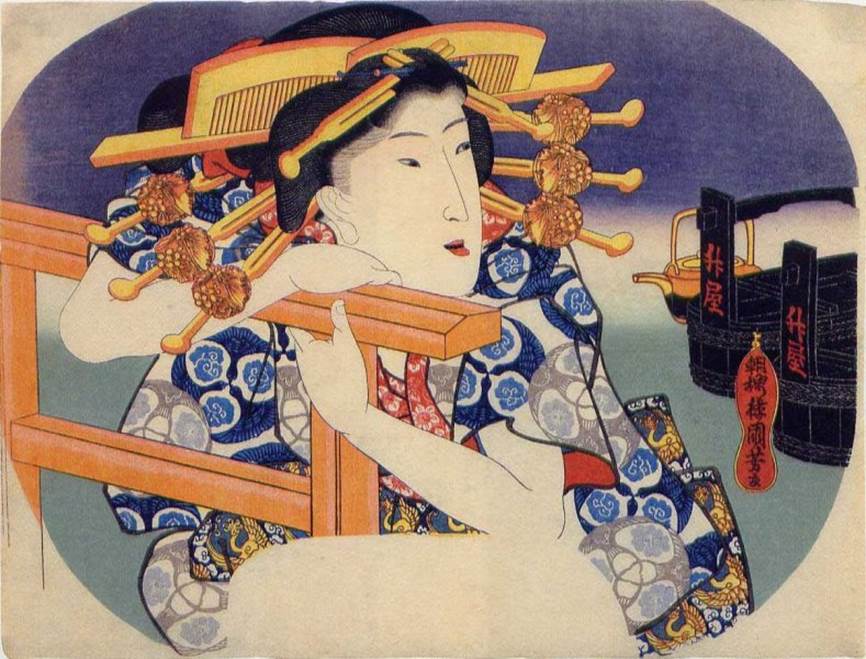
Series: None Title: None Description: Courtesan
leaning on a balustrade Date: c. 1842 Publisher: |
|
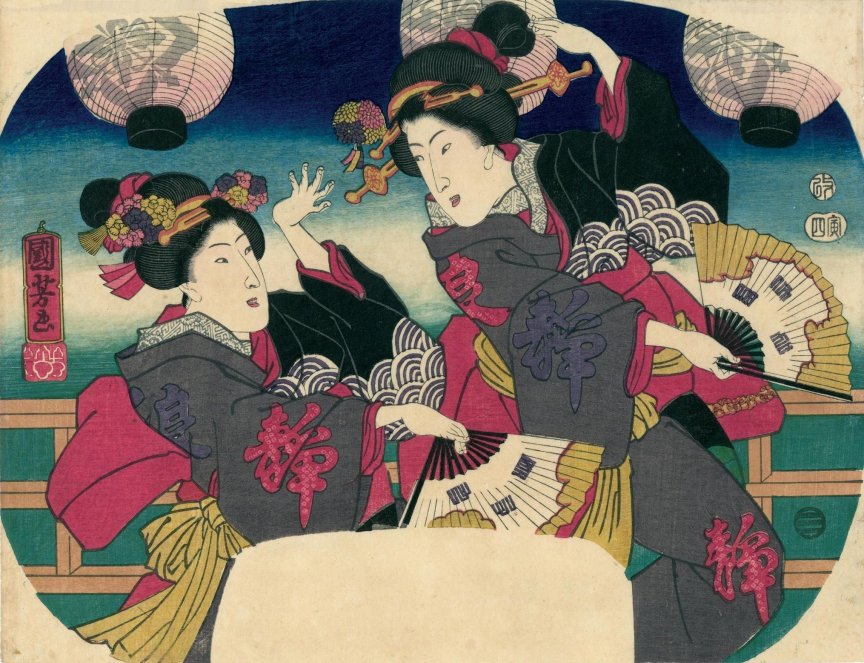
Title: None Description: Two Ise Ondo dancers
in identical costumes on a terrace with folding fans Date: 4th
month of 1854 Publisher: Iba-ya Senzaburô I am grateful to Robert Pryor for information about this print. |
|
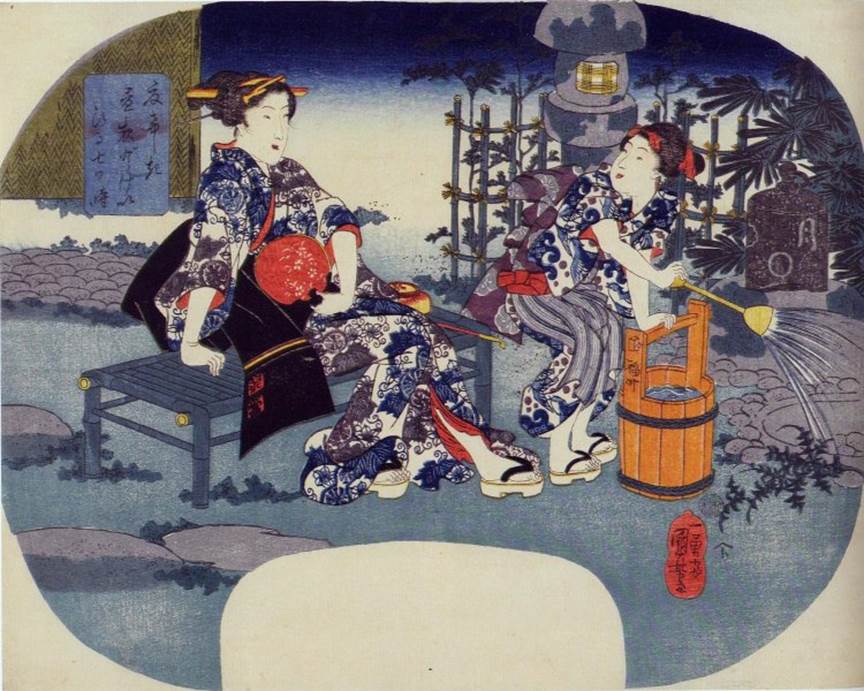
Series: Summer
Scenes: The Hours of Day and Night (夏けしき昼夜どけい, Natsu kechiki chûya dokei) Robinson: Not listed Title: About 4 pm (ひる七ツ時, Hiru nanatsudoki) Description: One woman
sitting on a bench and another watering plants in a garden Date: 1843-1846
(censor Muramatsu Genroku) Publisher: Enshû-ya Matabei |
|
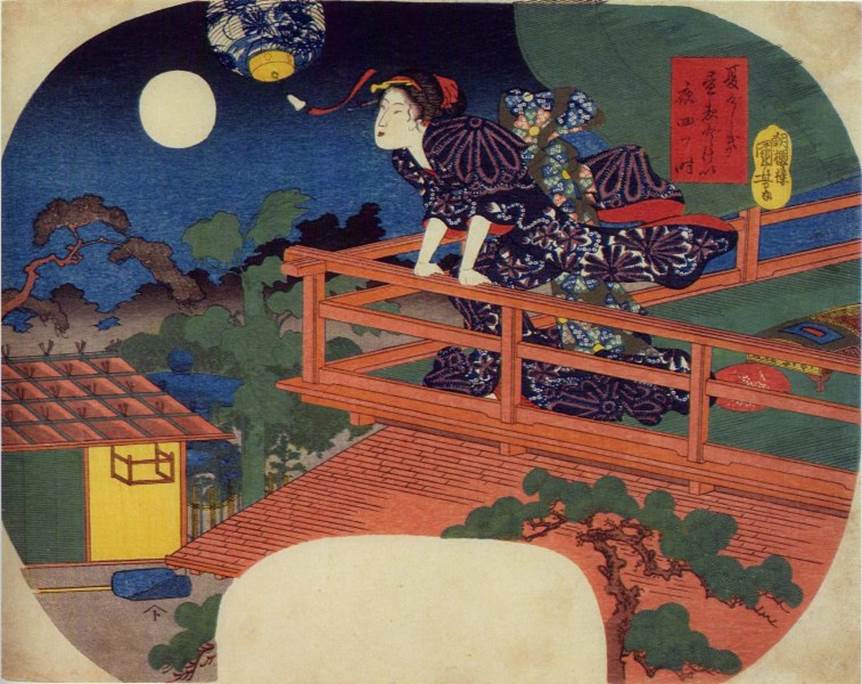
Series: Summer
Scenes: The Hours of Day and Night (夏けしき昼夜どけい, Natsu kechiki chûya dokei) Robinson: Not listed Title: About Description: Woman on a
balcony looking at a full moon Date: 1843-1846 Publisher: Enshû-ya Matabei |
|
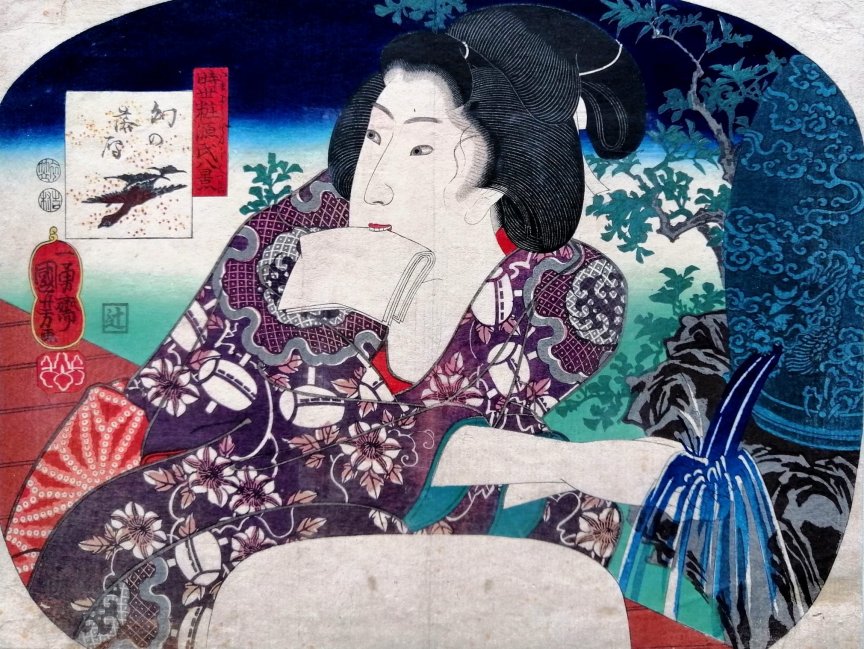
Series: Eight Views of… (…
hakkei, …八景) Title: Returning
Geese (...no rakugan, …の落雁) Description: Woman washing
her hands while holding a letter in her mouth Date: 1849 (censors
Kinugasa and Yoshimura) Publisher:
Ise-ya Ichiemon |
|
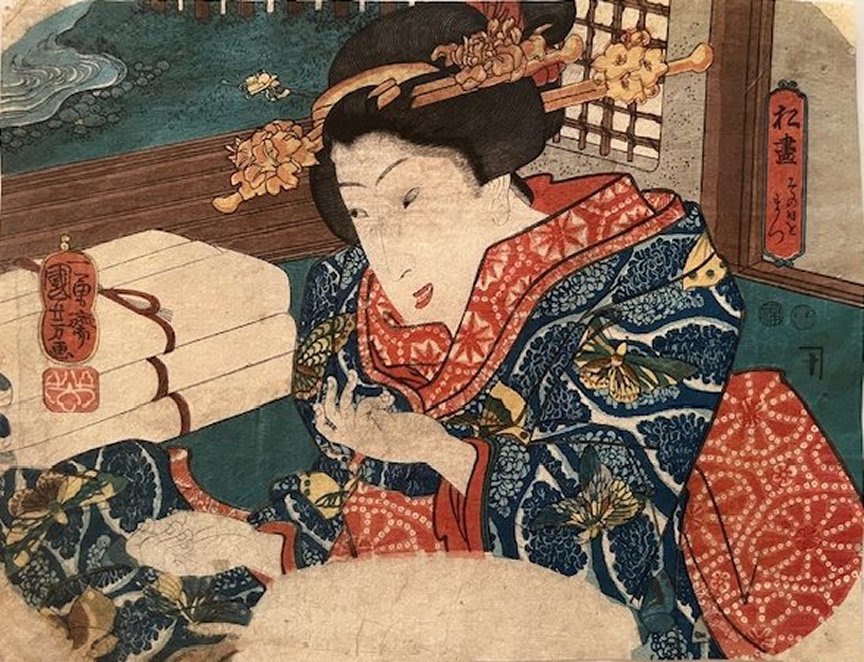
Title: Description: Woman with
bundles of fabric Date: 1846-1852 Publisher: Kojima-ya Jûbei I am grateful to Barascud Nicolas
for this image. |
|
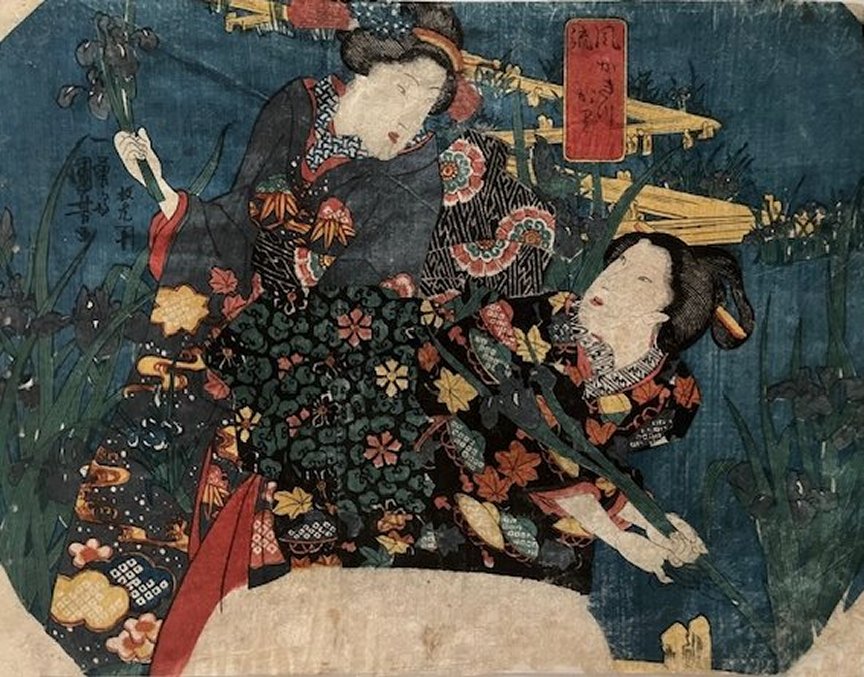
Title: Description: Two women by
a bridge across an iris pond Date: c. 1841-1842 Publisher: Kojima-ya Jûbei I am grateful to Barascud Nicolas
for this image. |
|
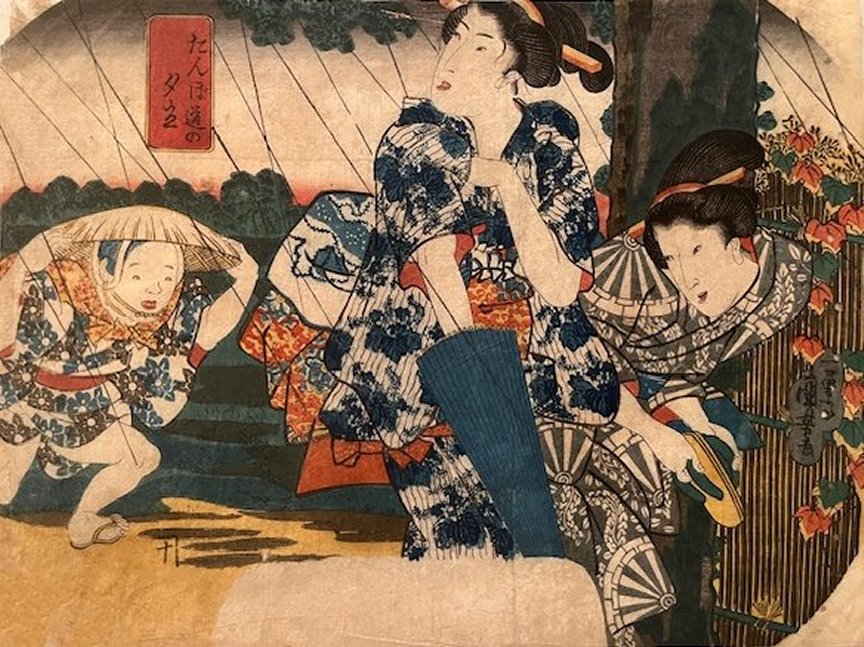
Title: Description: Two women and
a child in the rain Date: Publisher: Kojima-ya Jûbei I am grateful to Barascud Nicolas
for this image. |
|
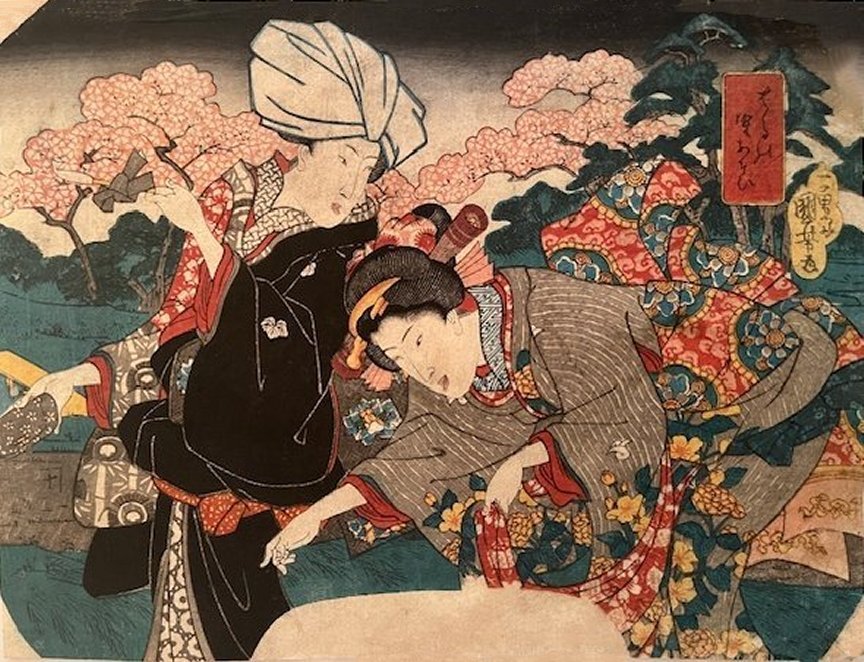
Title: Description: Date: c. 1841-1842 Publisher: Kojima-ya Jûbei I am grateful to Barascud Nicolas
for this image. |
|
Title: Description: A woman at a
window with flowers Date: 1843-1846
(censor Mera Ta’ichirô) Publisher: Kojima-ya Jûbei I am grateful to Barascud Nicolas
for this image. |
|
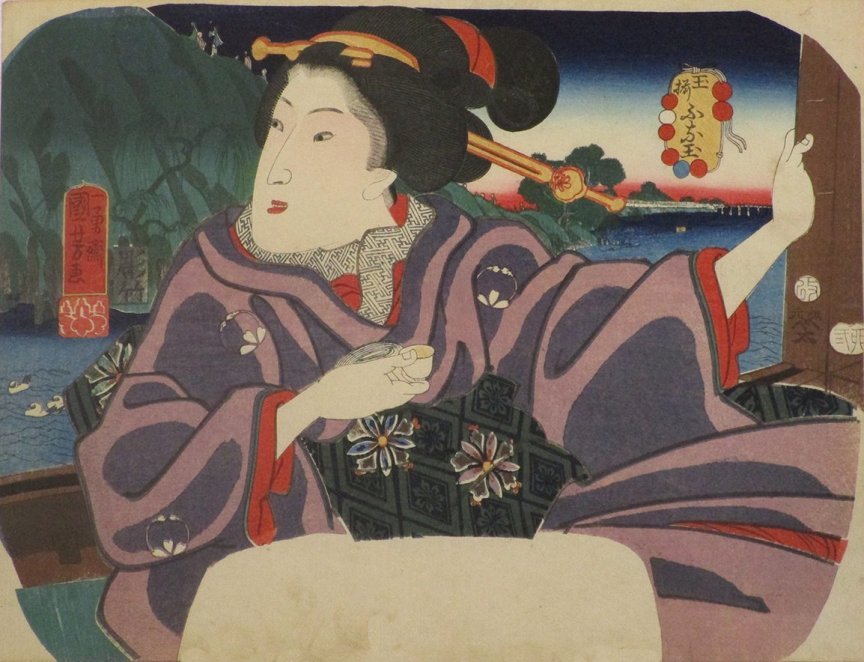
Series: A Set of
Jewels (Tama zoroi, 玉揃) Robinson: Not listed Title: The God of
Ships (Fundama, ふな玉) Description: Date: 2nd
month of 1855 Publisher: Hanmoto ta NOTE: Fundama (ふな玉) literally translates as “ship jewel”, the protective deity of ships,
but it is also slang for female genitalia.
I am grateful to Robert Pryor for this image and information. |
|
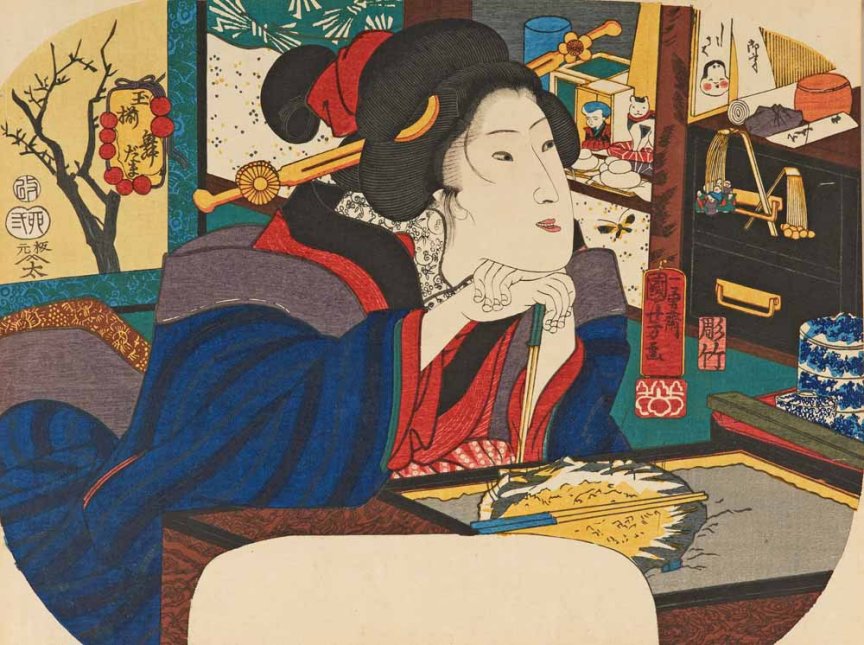
Series: A Set of
Jewels (Tama zoroi, 玉揃) Robinson: Not listed Title: Mayudama (舞だま) Description: Date: 2nd
month of 1855 Publisher: Hanmoto ta NOTE: Mayudama (舞だま) are New Years decorations. I am
grateful to Robert Pryor for this image and information. |
|
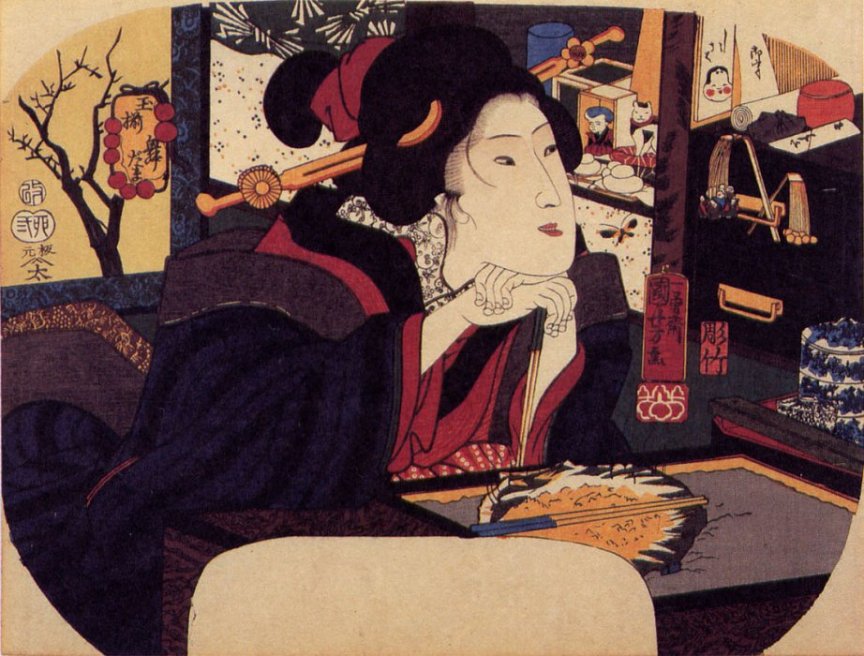
I am grateful to Robert Pryor for this alternate
state of the above design |
|
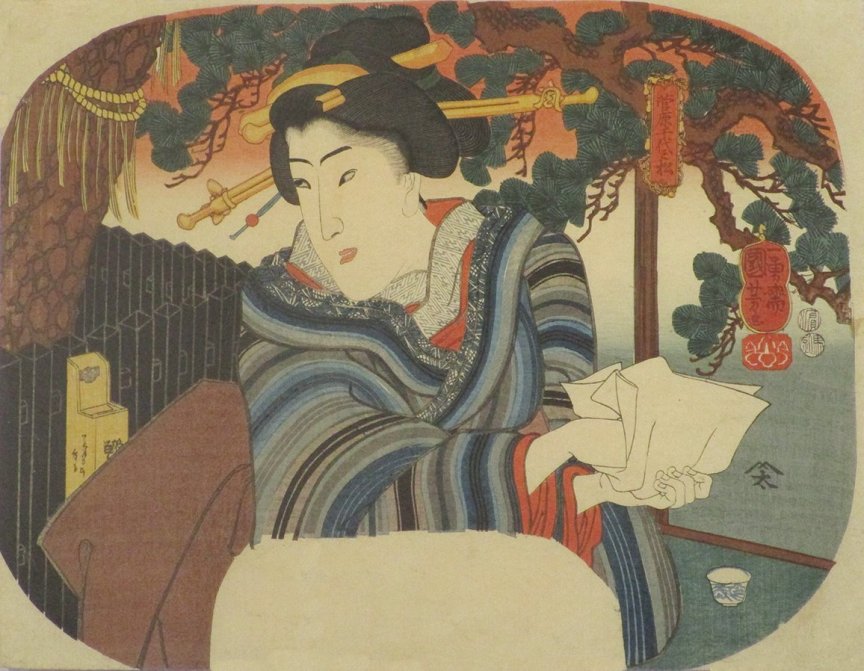
Title: The Sugawara
Eternal Pine or The Sugawara Pine of a Thousand Ages (Sugawara chiyo no matsu, 菅原千代之松) Description: Woman holding
papers with a pine tree behind her Date: Publisher: Ta (phonetic
reading of 太) NOTE: The pine is
associated with Sugawara no Michizane and there are many Tenmangu shrines
with ancient sacred pines. I am
grateful to Robert Pryor for this image and information. |

|
“Robinson” refers to listing of the series in Kuniyoshi by Basil William Robinson (Victoria and Albert Museum, London, 1961).
|