Famous Products of Mountain and Sea
(Sankai meisan zukushi, 山海名産盡)
Publisher: Shin’Ise-ya Kohei
c. 1833
|
This series of prints is listed as number 193 in Kuniyoshi by Basil William Robinson (Victoria and Albert Museum, London, 1961). The prints in this series are each about 14 by 10 inches (36 by 25 centimeters), a size known as ôban. I am grateful to Robert Pryor for his contributions to this series. |
|
|
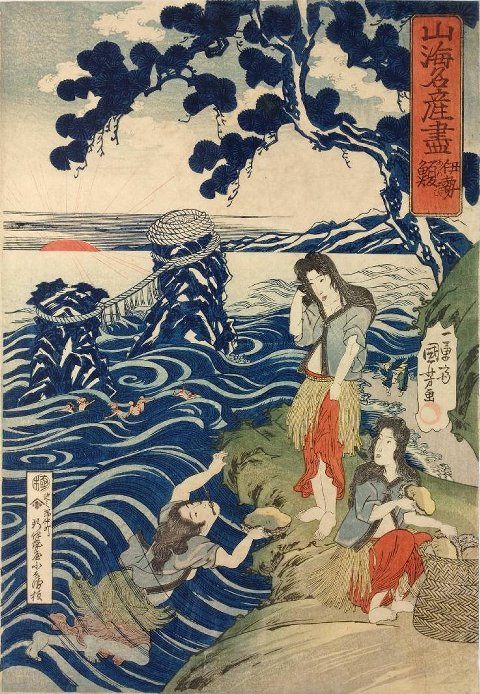
Title: Ise Abalone (伊勢鰒, Ise awabi) Description: Women diving
for abalone at Ise with the “wedded rocks” of Futami
bay in the mid-ground |
|
|
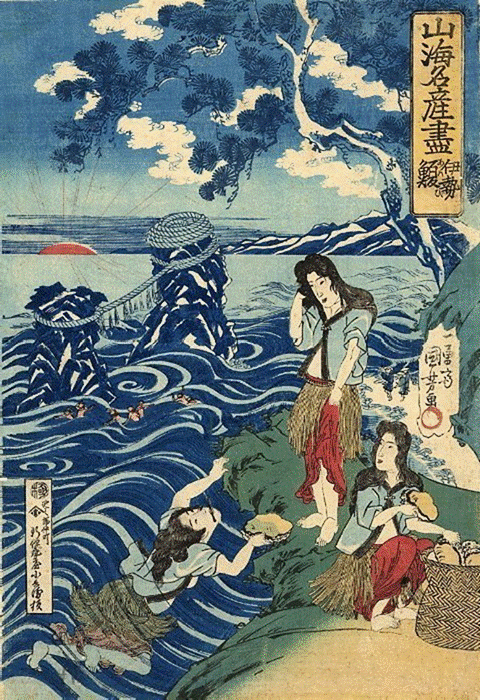
Another state of the above design with a yellow title cartouche,
also published by Shin’Ise-ya Kohei |
|
|
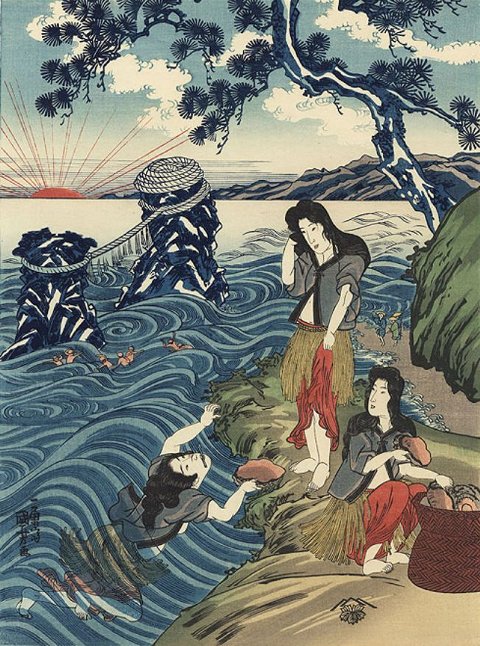
This later edition was printed from new woodblocks and published
by Tsuta-ya Jûzaburô. |
|
|
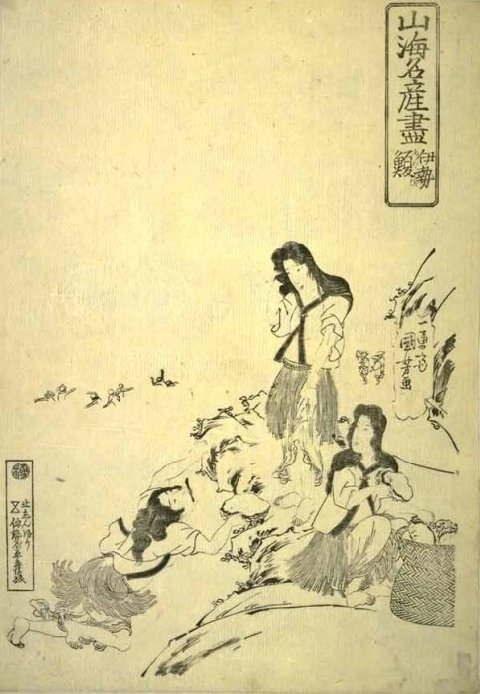
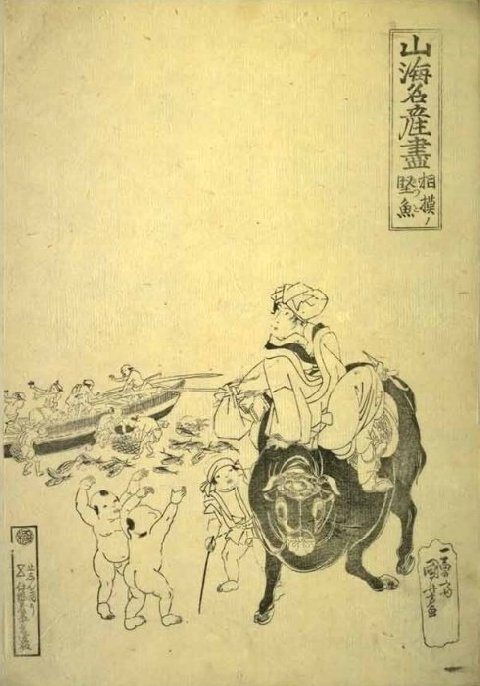
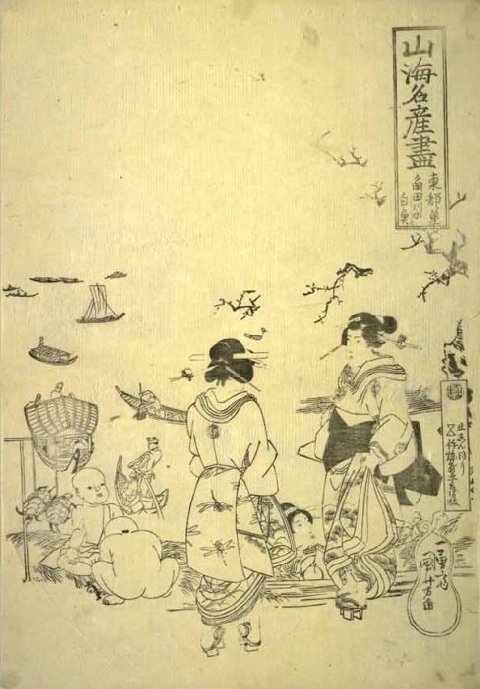
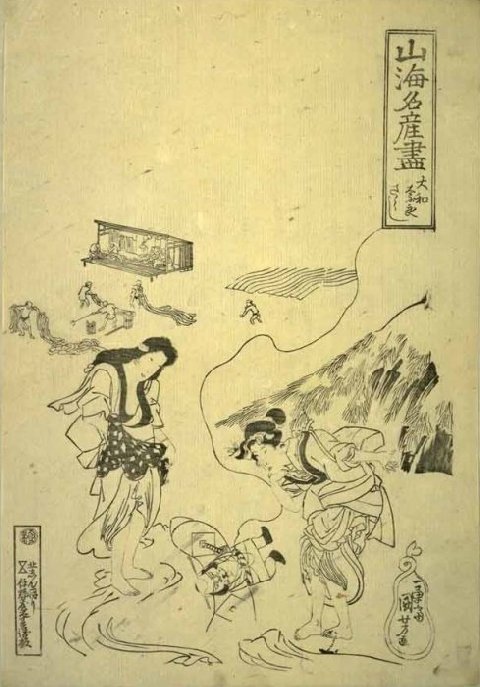
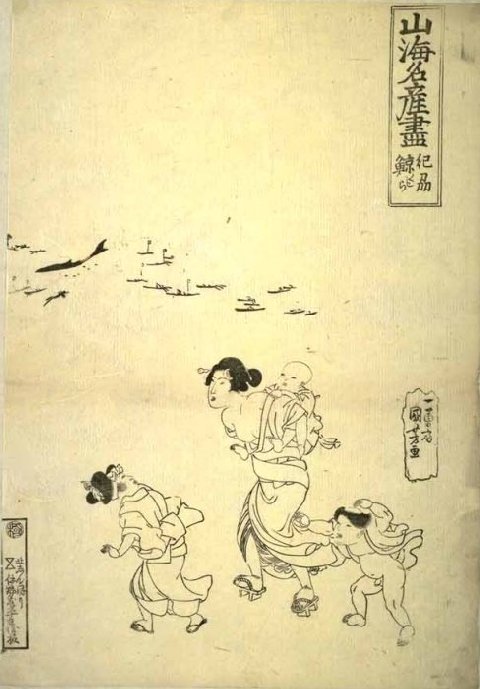
This is a keyblock print for the above design. A keyblock print (kyôgô
or kyôgozuri-e) is one of the first
impressions pulled from the first woodblock made by a carver from the
artist’s original drawing. It is given
to the artist to make notations about color, and possibly other alterations. The keyblock is also used to print black
(usually) on the finished print. Note
that this print, and the other illustrated keyblock prints, have publisher’s
seals that are different from the seals on the completed prints. |
|
|
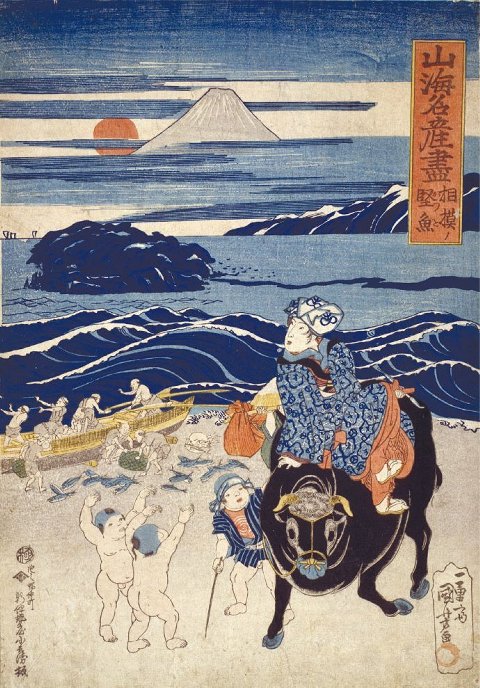
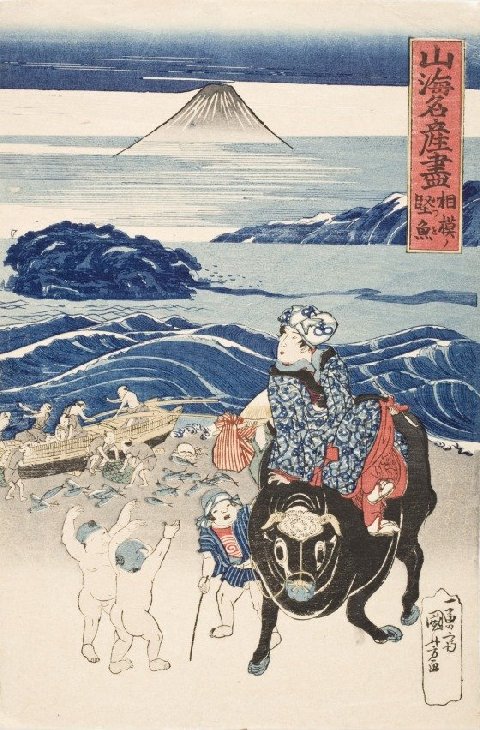
Title: Bonito (a
schooling fish of the tuna family) from Description: Beauty on
bull in foreground and |
|
|
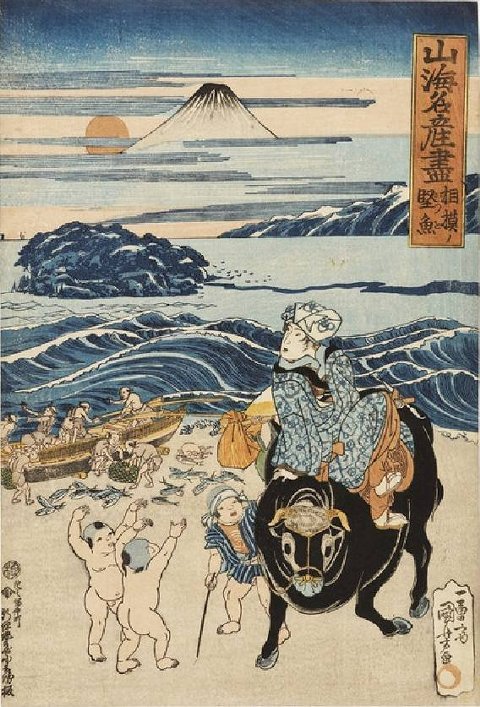
Another state with the top of Mt. Fuji black |
|
|
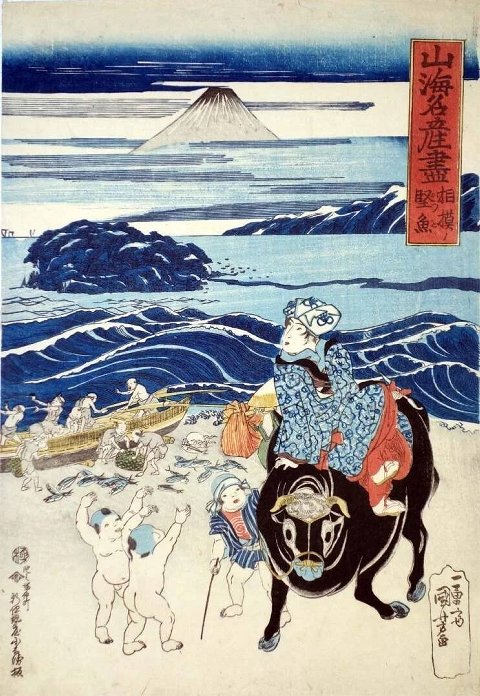
An additional state without the sun |
|
|
Another state of the above design lacking the censor’s and
publisher’s seals in the left lower corner |
|
|
Keyblock print for the above design |
|
|
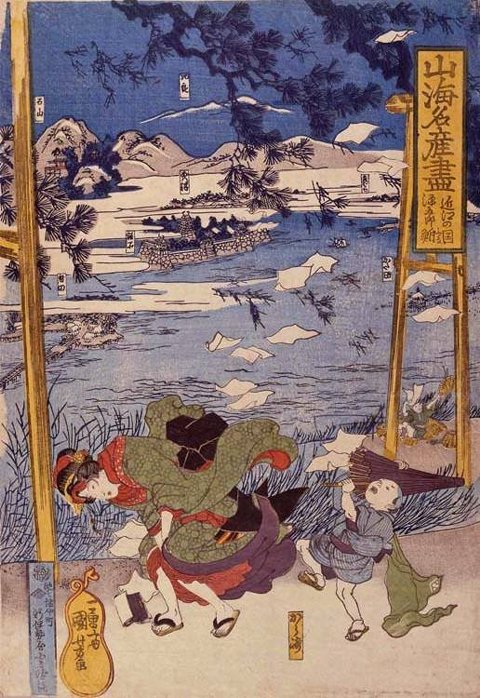
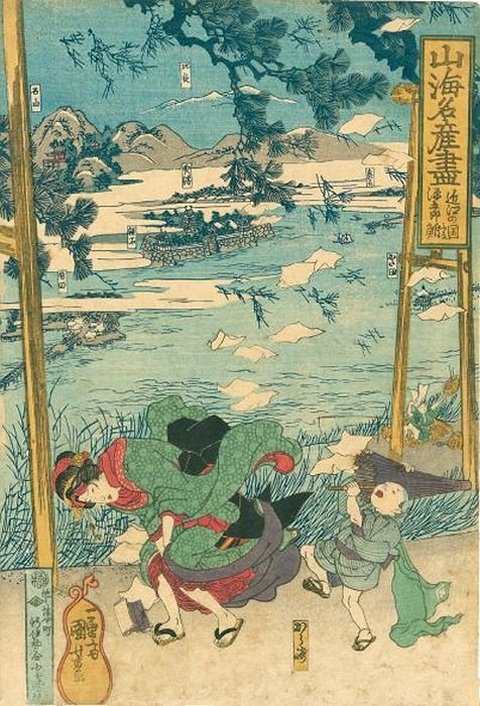
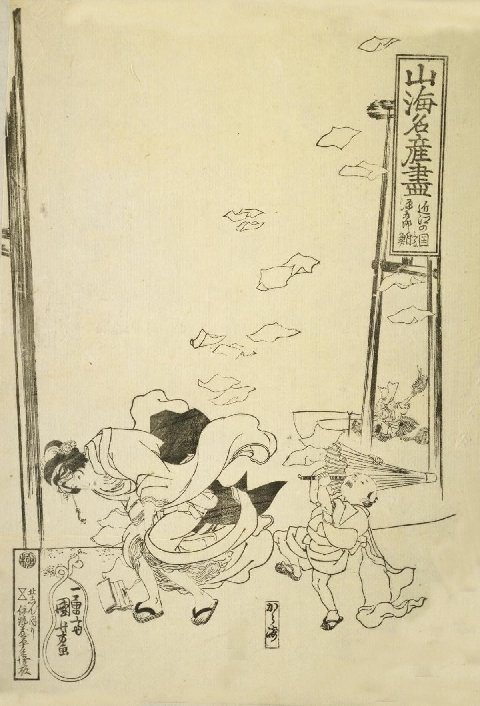
Title: Crucian Carp
(Carassius carassius) from Description: Woman and
child caught in the wind |
|
|
Another state of the above design |
|
|
Keyblock print for the above design |
|
|
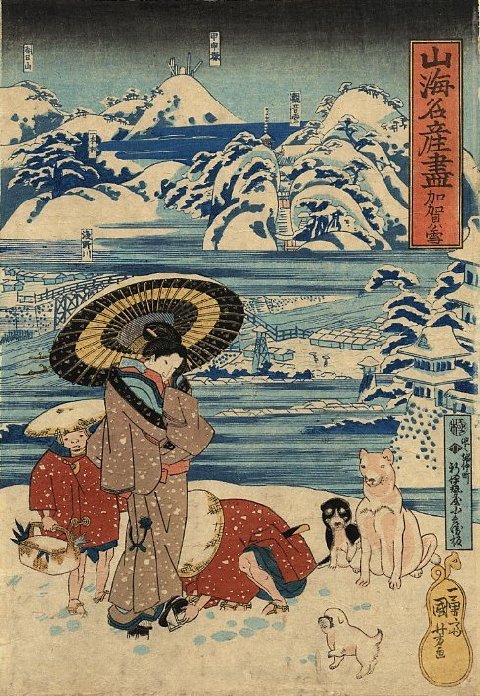
Title: Frozen Snow
from Description: Woman with
umbrella having her wooden sandal (geta)
adjusted |
|
|
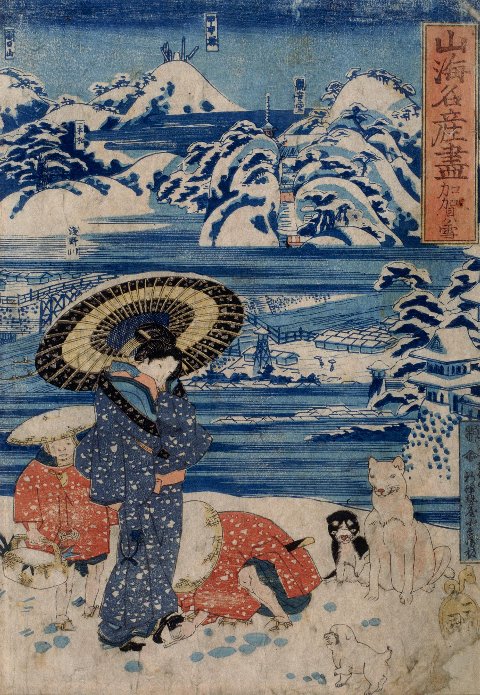
Another state of the above design |
|
|
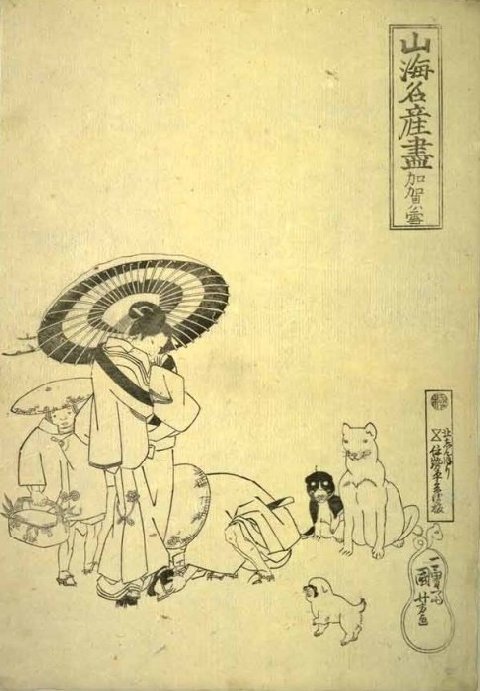
Keyblock print for the above design |
|
|
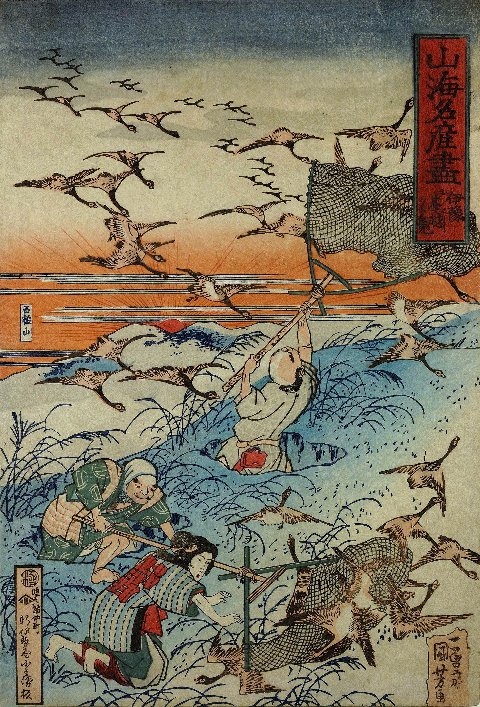
Title: Geese from
Iyo (a city in Description: Catching
geese with nets |
|
|
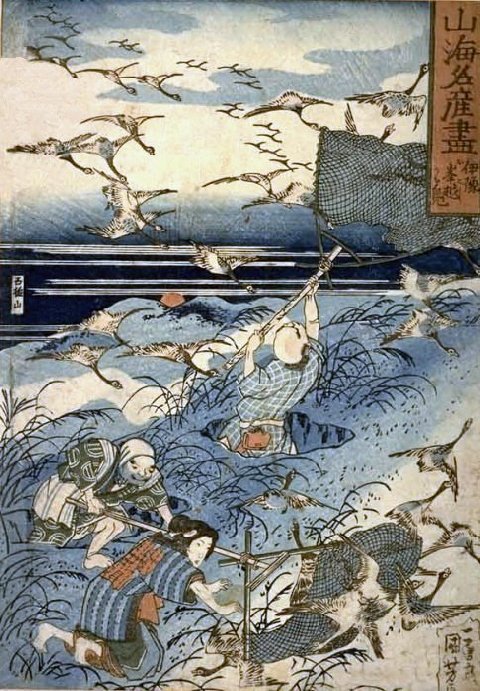
Another state of the above design lacking the cartouche in the
left lower corner containing the publisher’s seal |
|
|
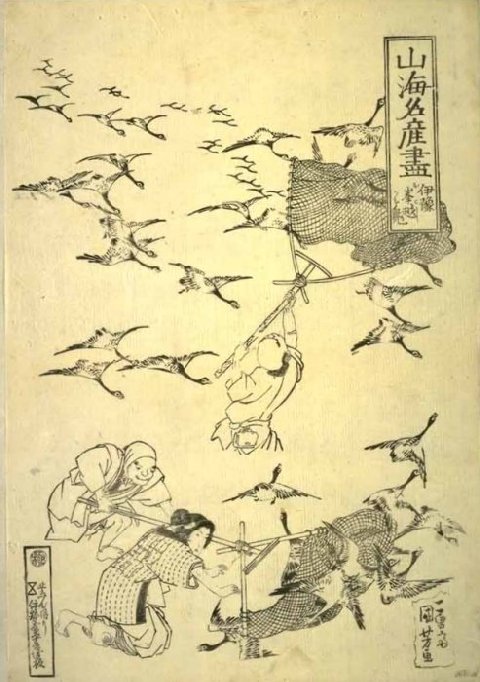
Keyblock print for the above design |
|
|
Title: Icefish from
the 歌) Description: Fishing boats
with |
|
|
Keyblock print for the above design |
|
|
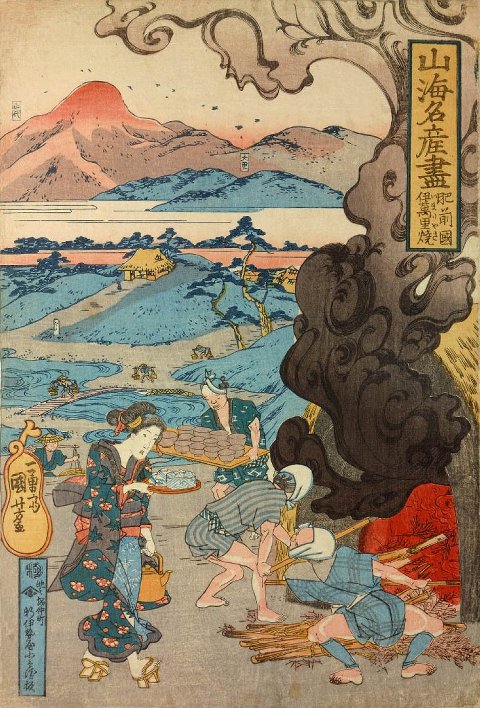
Title: Description: A smoky kiln
in the foreground |
|
|
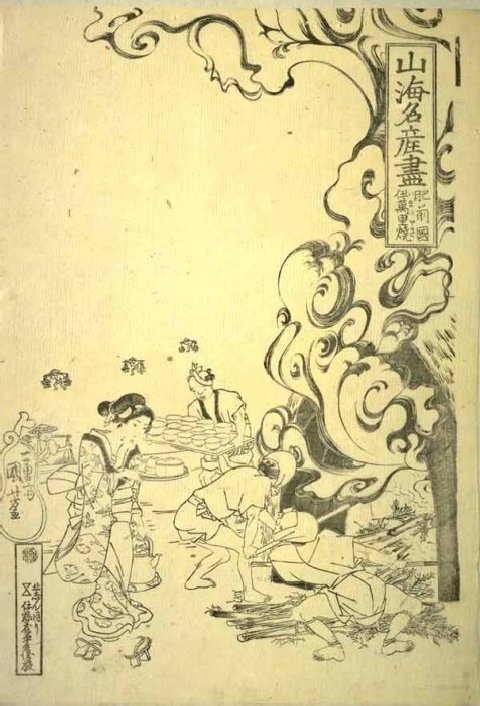
Keyblock print for the above design |
|
|
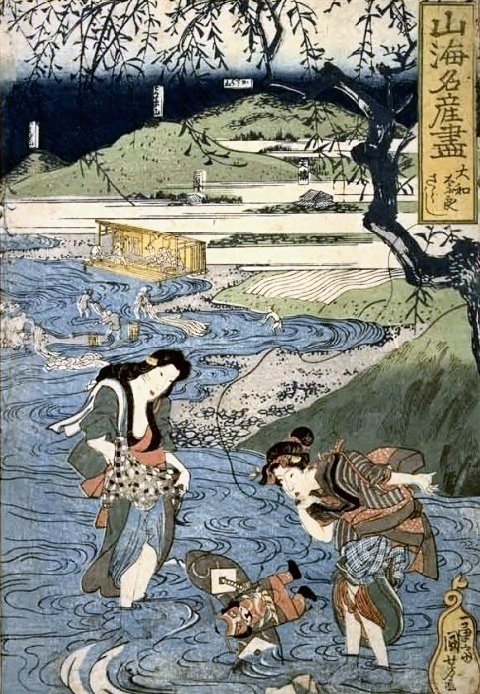
Title: Description: Two women
looking at a kite that has fallen in the water |
|
|
Keyblock print for the above design |
|
|
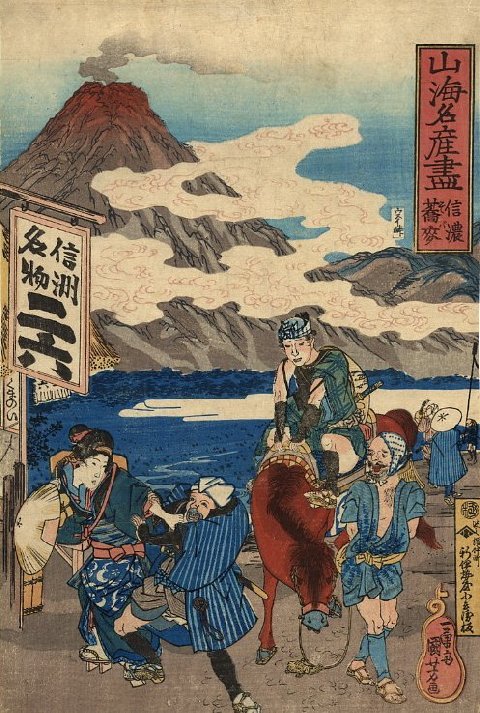
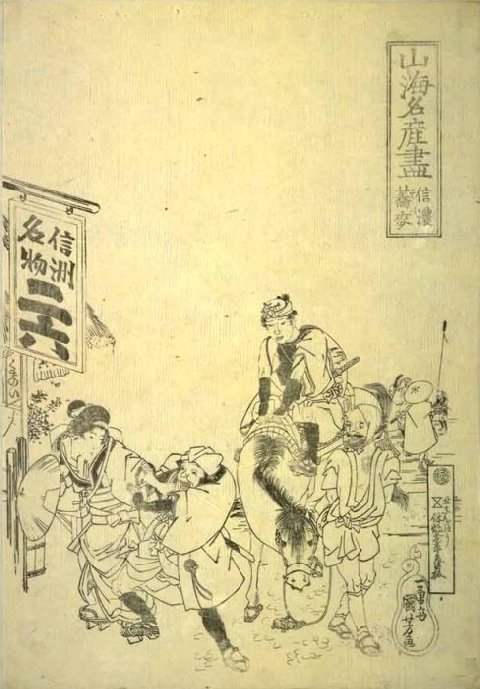
Title: Noodles from Description: Travelers
with |
|
|
Keyblock print for the above design |
|
|
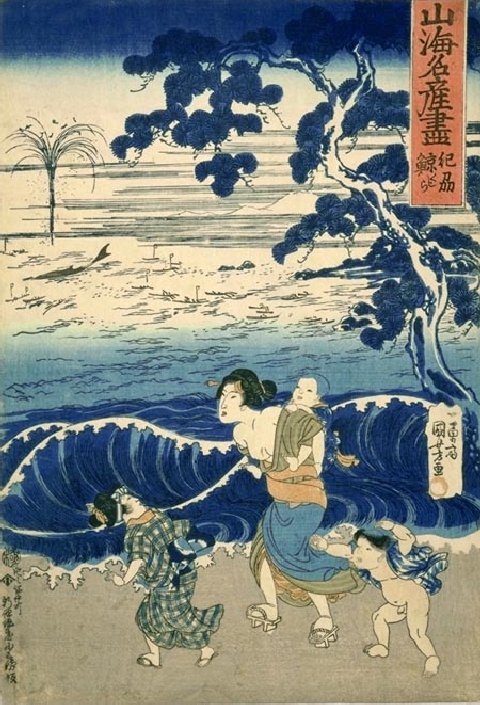
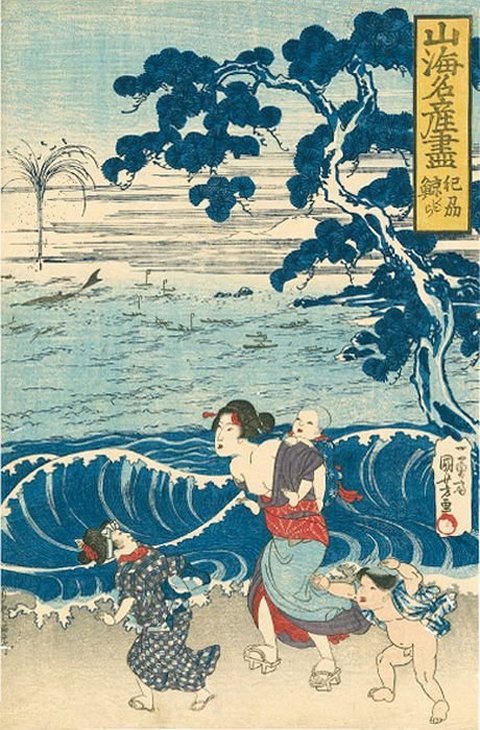
Title: Whales from Description: Woman with
three children |
|
|
Another state of the above design with a yellow title cartouche |
|
|
Keyblock print for the above design |
CLICK HERE TO RETURN TO MAIN PAGE
|
|