Comparison of the High Renown of the Loyal Retainers
and Faithful Samurai
(Chûshin gishi kômei kurabe,
忠臣義士高名比)
Publisher: Kobayashi Taijirô
1848
|
In
1702, Lord Asano of Akô was provoked by Kira Kozukenosuke Yoshinaka into drawing his sword in the
shogun’s palace, for which he was forced to take his own life, and his estate
was confiscated. Forty-seven of Lord
Asano’s retainers, who were now rônin
(samurai without masters), planned
and carried out a successful attack on Kira’s palace. Kira’s head was cut off with the same
dagger Lord Asano used to commit seppuku. (The term “hara-kiri”, although more common in English than “seppuku”, is considered in |
|
|
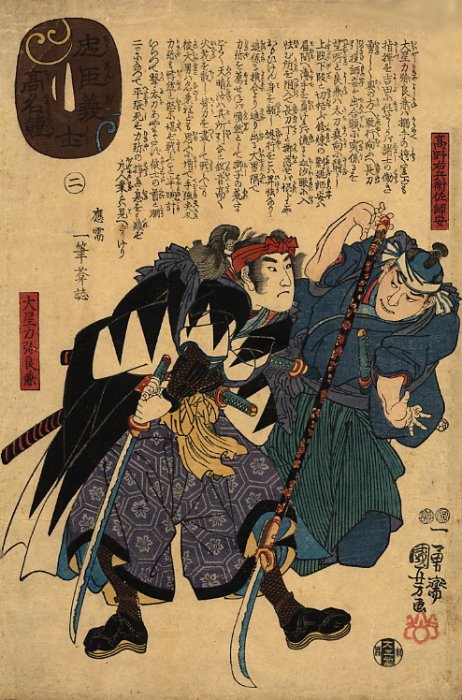
Scene: Ôboshi Rikiya Yoshikane (大星力弥良兼) strikes a naginata out of the hands of Takano Uheinosuke Moroyasu (高野右兵衛佐師安) Robinson: S57.2 Image courtesy of Richard Norcross |
|
|
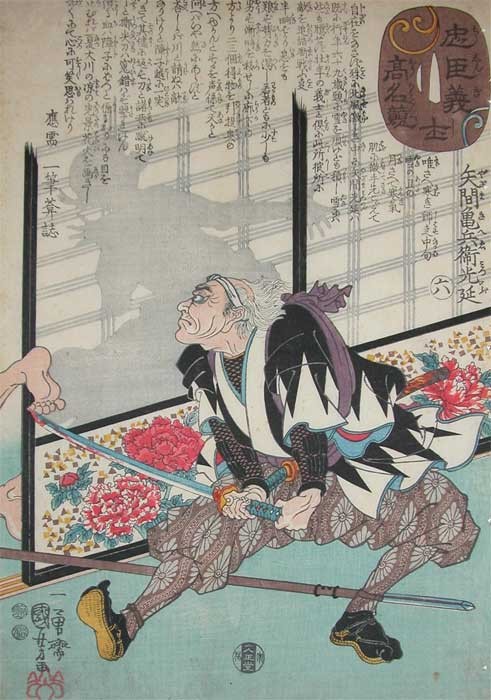
Scene: Yazama Kihei Mitsunobu (矢間亀兵衛光延) making a
sword stroke at a fleeing adversary by a shôji screen on which the shadow of another fleeing figure is seen Robinson: S57.6 |
|
|
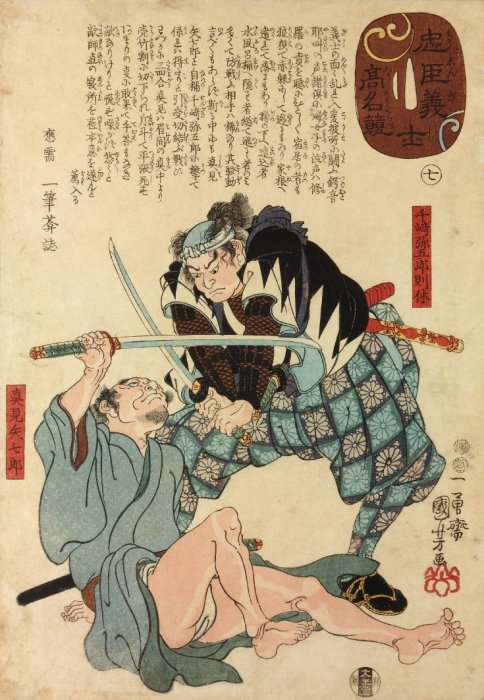
Scene: Senzaki Yagorô Noriyasu (千崎弥五郎則休) cutting at
the fallen Shimmi Yashichirô
(真見矢七郎) who blocks
his downward sword stroke Robinson: S57.7 |
|
|
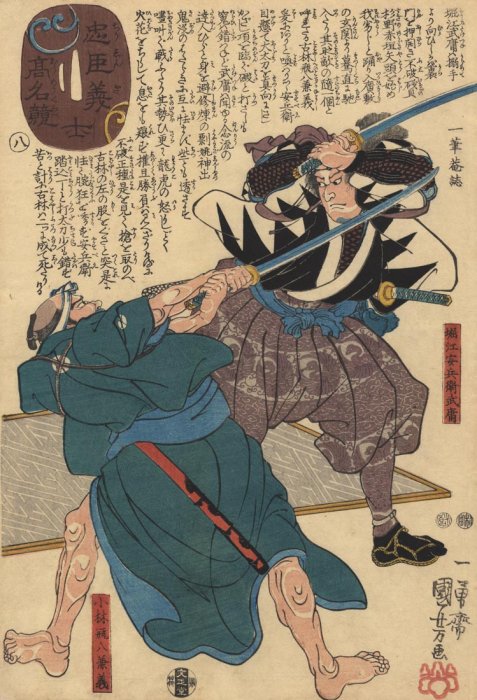
Scene: Horie Yasubei Taketsune Taketsune (堀江安兵衛 武庸) and Kobayashi
Heihachi Kaneyoshi (小林瓶八兼義) fighting by a
fallen screen Robinson: S57.8 |
|
|
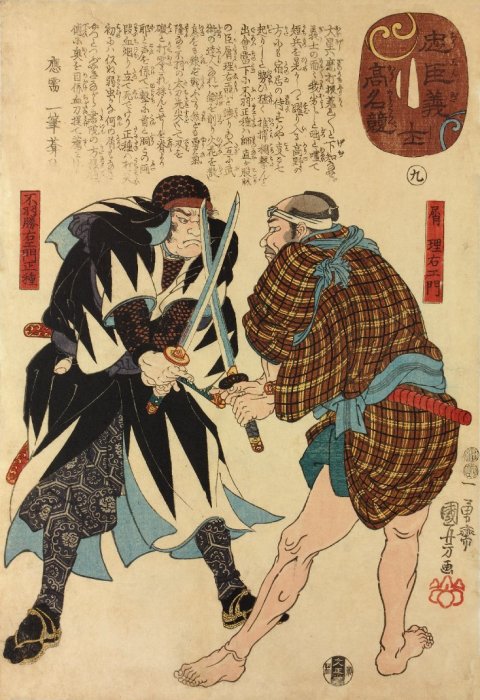
Scene: Fuwa Katsuemon Masatane (不羽勝右工門正種) and Torie Riemon (屠 理右工門) fighting
eyeball to eyeball with crossed swords Robinson: S57.9 |
|
|
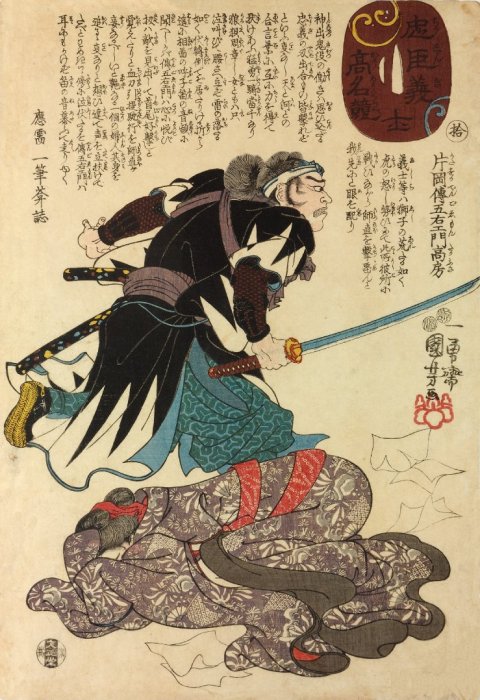
Scene: Kataoka Dengoemon Takafusa (片岡傳五石衛門髙房) with sword in
hand running past a cowering woman Robinson: S57.10 |
|
|
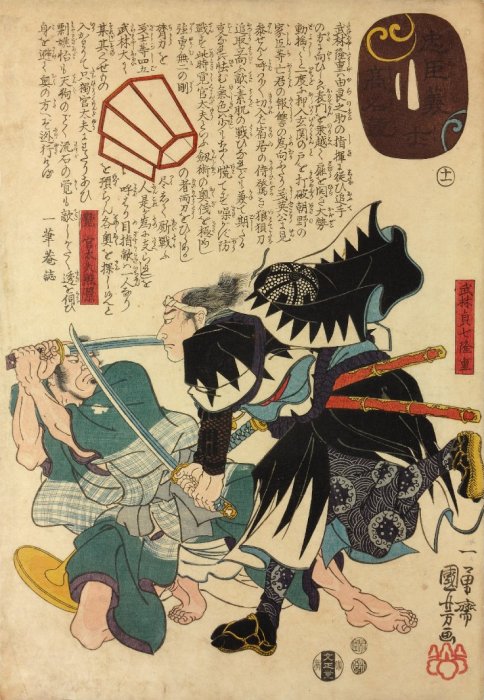
Scene: Takebayashi Sadashichi Takashige (武林貞七隆重) in combat
with Kwandayû Terukage (?官太尤照景) Robinson: S57.11 |
|
|
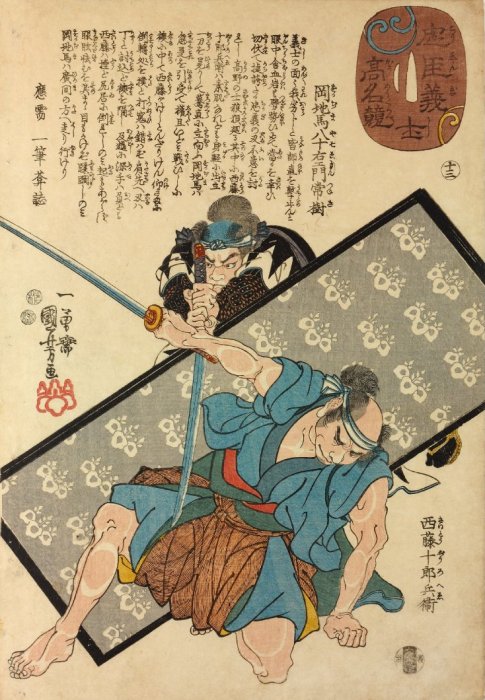
Scene: Okajima Yasôemon Tsuneki (岡地島八十右エ門常樹) in combat
with Saitô Jurobei (西藤十郎兵衛) Robinson: S57.13 |
|
|
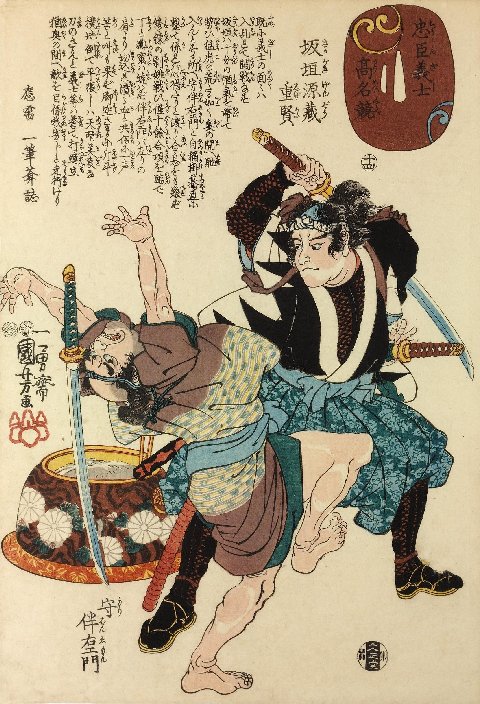
Scene: Sakagaki Genzô Shigetaka (坂垣源蔵 重賢) in combat
with Mori Hanemon (守 伴石エ門) Robinson: S57.14 |
|
|
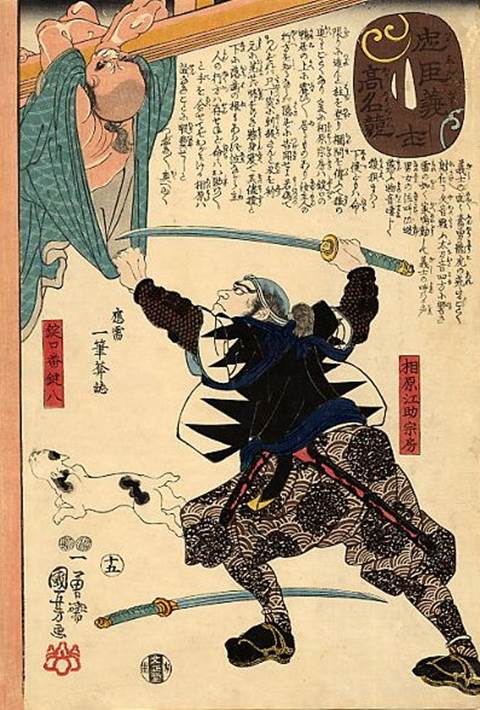
Scene: Aihara Esuke Munefusa (相原江助宗房) pulling Kempachi down from his hiding place Robinson: S57.15 Image courtesy of Richard Norcross |
|
|
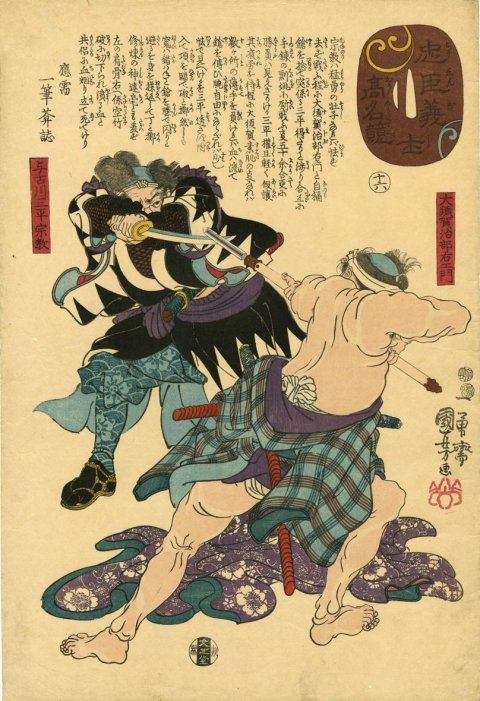
Scene: Yukugawa Sampei Munenori (与川三平宗敬) with a sword
in combat with a foe armed with a pole arm Robinson: S57.16
(listed but not described) |
|
|
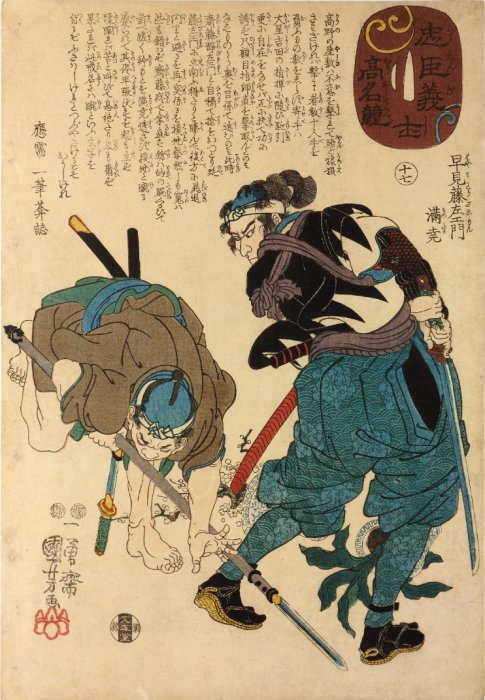
Scene: Rear view of
Hayami Tôzaemon Mitsutaka
(早見藤左工門 満尭) fighting a
foe who is stumbling over two potted plants Robinson: S57.17 |
|
|
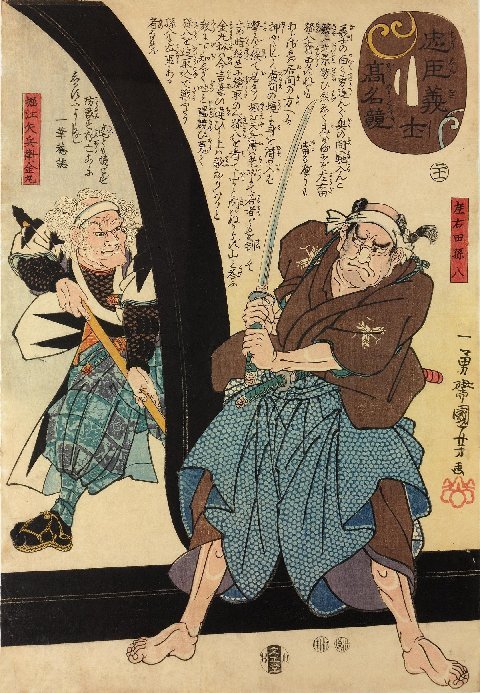
Scene: Chiba Saburohei Kanamaru (堀江矢兵衛金丸) in combat
with Magohachi (左石田孫八) who waits for
him behind an archway Robinson: S57.21 |
|
|
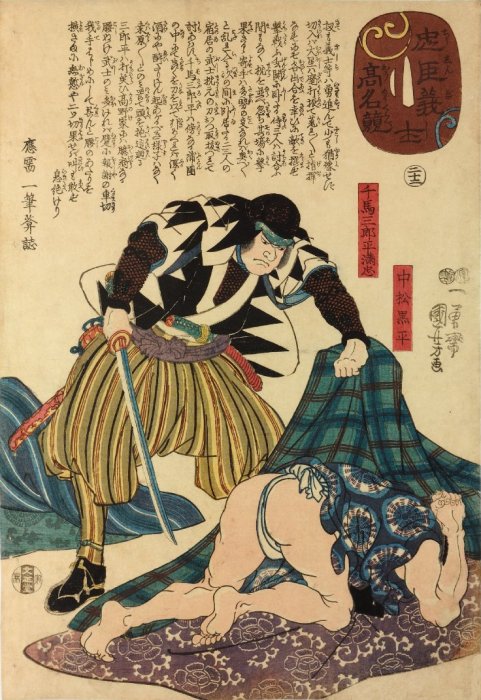
Scene: Chiba Saburohei Mitsutada (千馬三郎平衛満忠) with a drawn
sword discovers Nakamatsu Kurobei
(中松黒平) hiding under
a blanket Robinson: S57.22 |
|
|
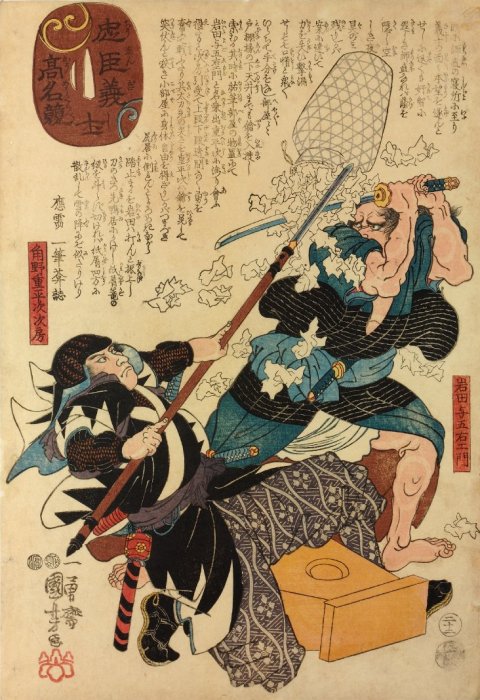
Scene: Kadono Jûheiji Tsugufusa (角野重平次次房) in combat
with Iwata Yagoemon (岩田与五右工門) Robinson: S57.22 bis. |
|
|
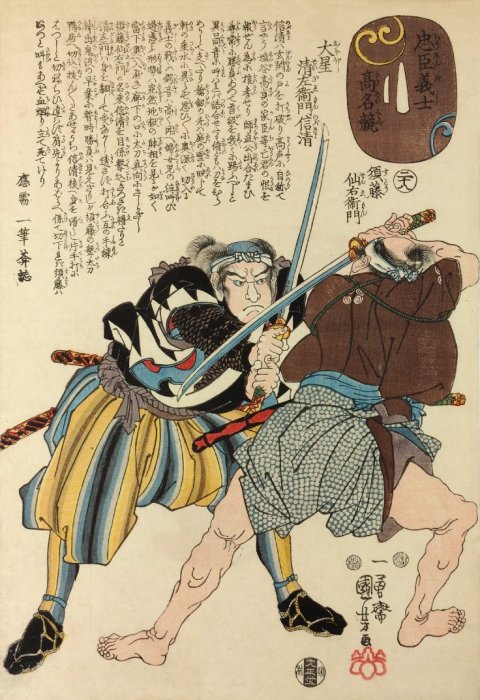
Scene: Ôboshi Seizaemon Nobukiyo (大星 清左衛門信清) in combat
with Sutô Senemon (須藤仙右衛門) Robinson: S57.28 |
|
|
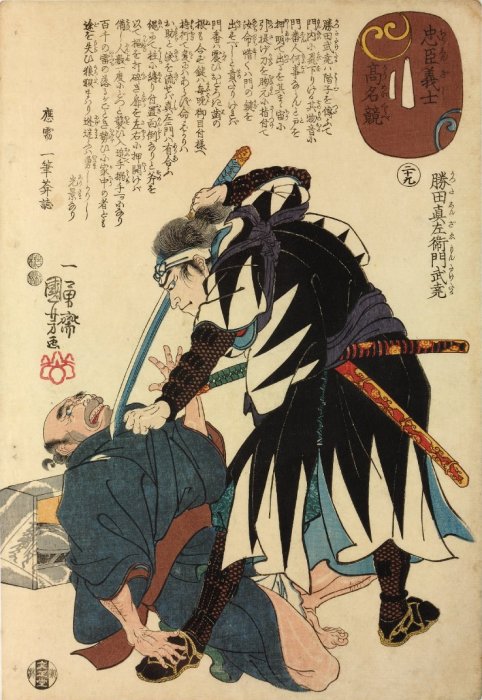
Scene: Katsuta Shinzaemon Taketaka (勝田真左衛門武尭) seizing an
unnamed opponent by his kimono and holding
a sword to his throat Robinson: S57.29 |
|
|
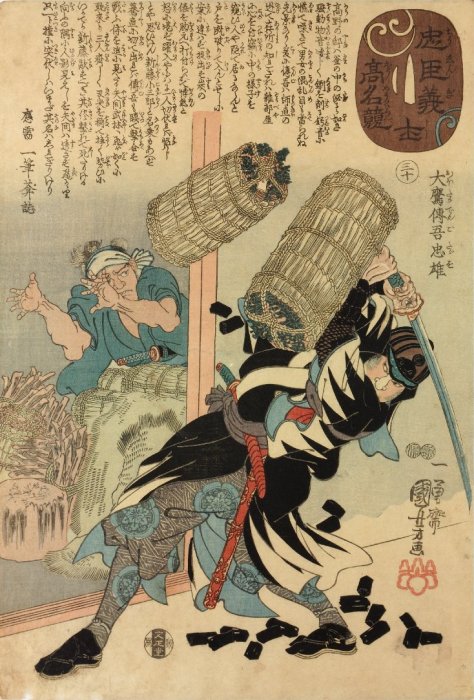
Scene: Ôtaka Dengo Tadao
(大高傳吾忠雄) fending off
bundles of charcoal that are being thrown at him Robinson: S57.30 Image courtesy of Richard Norcross |
|
|
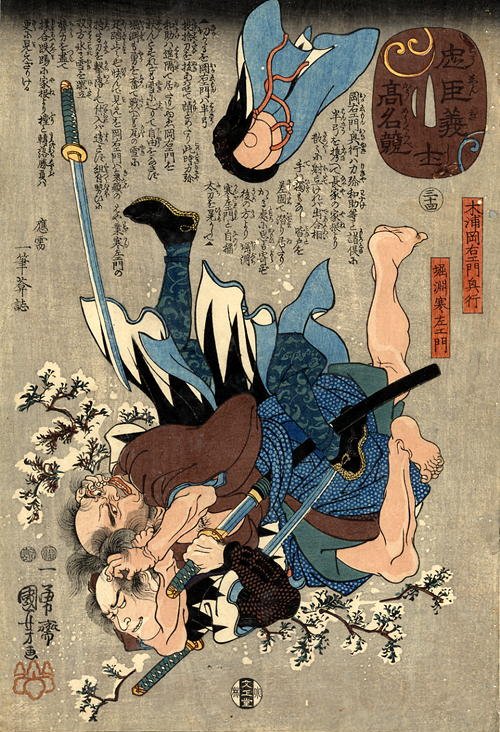
Scene: Kiura Okaemon Okiyuki (木浦 岡右エ門 奥行) in combat
with Horibuchi Kanzaemon
(堀淵寒 左エ門) Robinson: S57.34 Image courtesy of Richard Norcross |
|
|
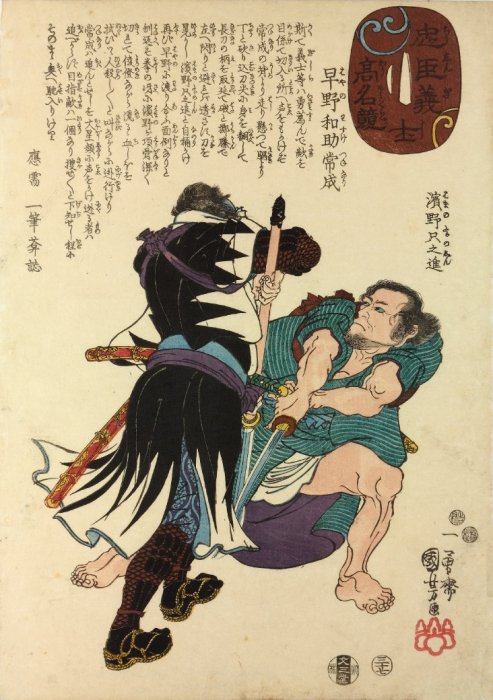
Scene: Rear view of Hayano Wasuke Tsunenari (早野和助常成) using a pole
arm against Hamano Tadanoshin (濱野尺之進) who is armed
with a sword Robinson: S57.37 Image courtesy of Richard Norcross |
|
|
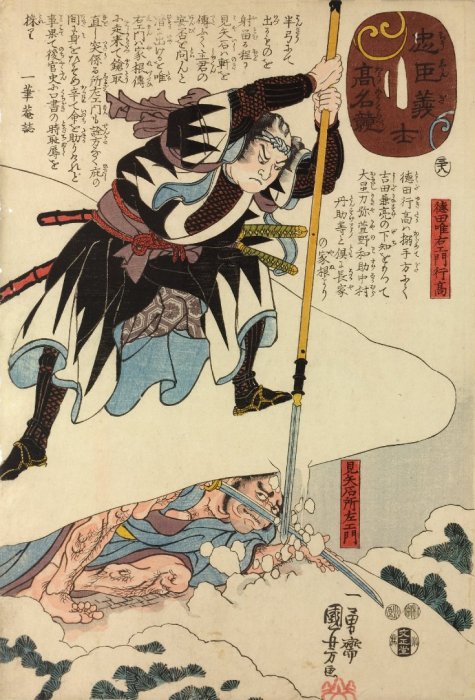
Scene: Tokuda Tadaemon Yukitaka (得田唯右工門行高) attacking
Miya-ishi Shozaemon (見矢石所左工門) who is hiding
under a snow-covered ledge Robinson: S57.38 Image courtesy of Richard Norcross |
|
|
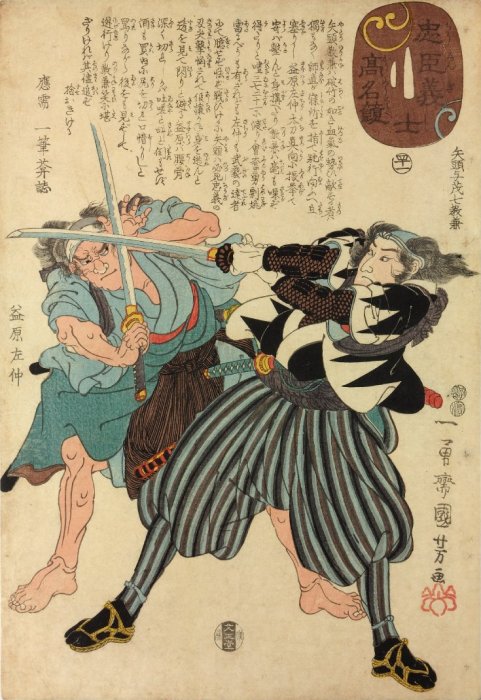
Scene: Yatô Yomoshichi Norikane (矢頭与茂七教兼) making a
two-handed sword stroke at Masuhara Sachû (益原左仲) who blocks it
with his own sword Robinson: S57.41 |
|
|
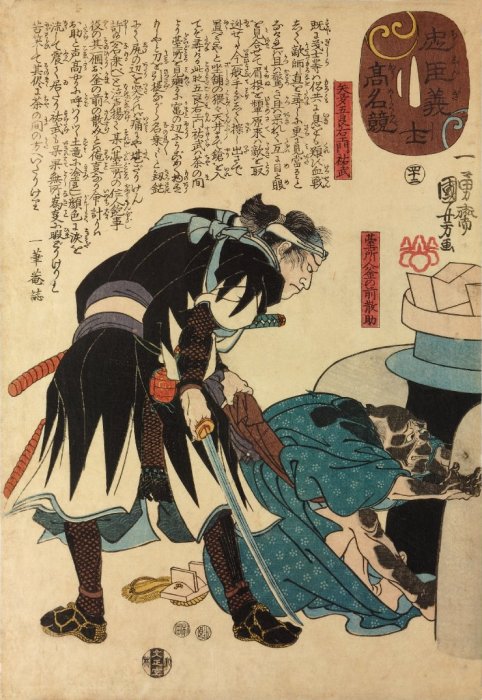
Scene: Yata Goroemon Suketake (矢多五郎右エ門祐武) pulls Sansuke out from a kitchen range (kamado) in which he had been hiding Robinson: S57.42 |
|
|
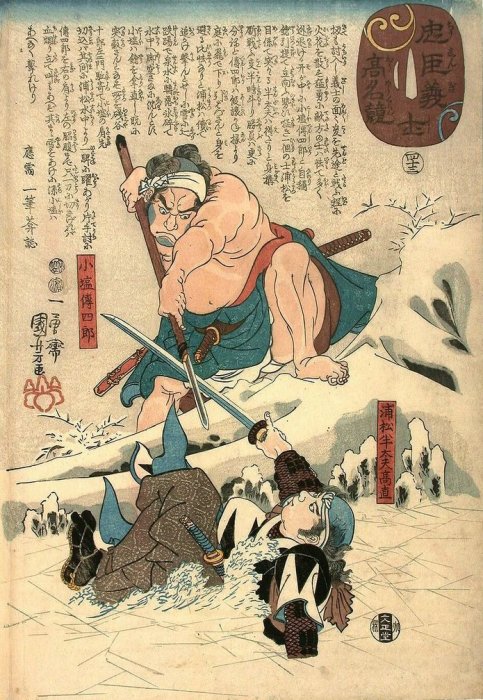
Scene: Uramatsu Handayû Takanao (浦松半太夫高直) falling
backwards into a frozen pond is attacked by Koshio Denshirô (小塩傳四郎) with a pole
arm Robinson: S57.43 Image courtesy of Richard Norcross |
|
|
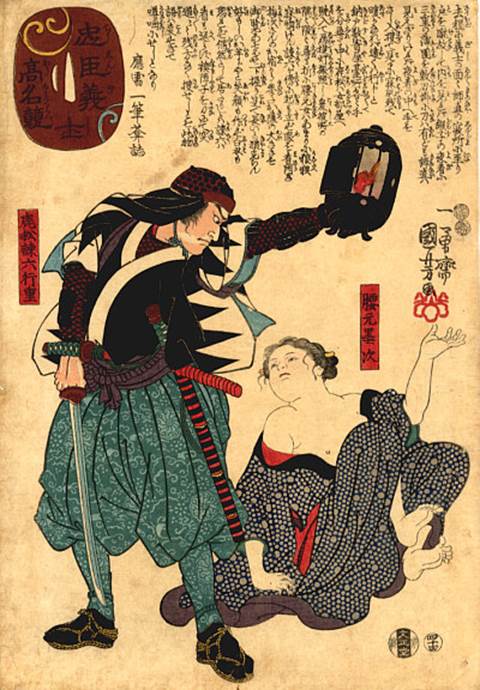
Scene: Shikamatsu Kanroku Yukishige (鹿松諌六行重) holding a
lantern discovers the maid Sumiji Robinson: S57.44 |
|
|
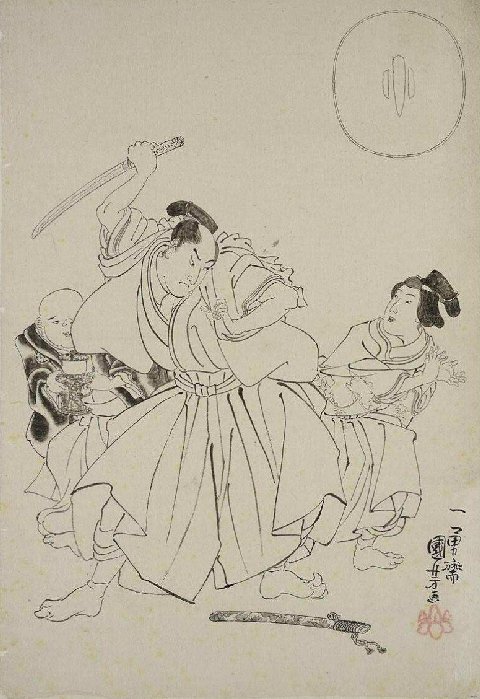
I am grateful to Robert Pryor for this hanshita-e
(final drawing) for another print in this series. |
|
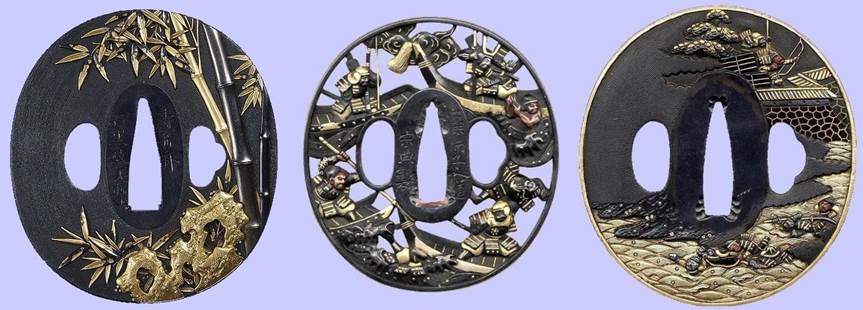
The title cartouche for this series is
in the shape of a hand-guard on a Japanese sword called a tsuba. A tsuba served to keep the user’s hand from sliding onto the
blade, to counterbalance the weight of the blade and to protect the hand from
an opponent’s blade. Tsuba were
often beautifully decorated, and three exceptional examples are shown below.
|
|
|
“Robinson” refers to listing in Kuniyoshi: The Warrior-Prints by Basil William Robinson (Cornell University Press, Ithaca, NY, 1982) and its privately published supplement. CLICK
HERE TO RETURN TO MAIN PAGE
|