108
Heroes of the Suikoden, One by One
(Suikoden gôketsu hyaku-bachi-nin no hitori, 水滸傳濠傑百八人之個)
1830,
reissued in 1842
|
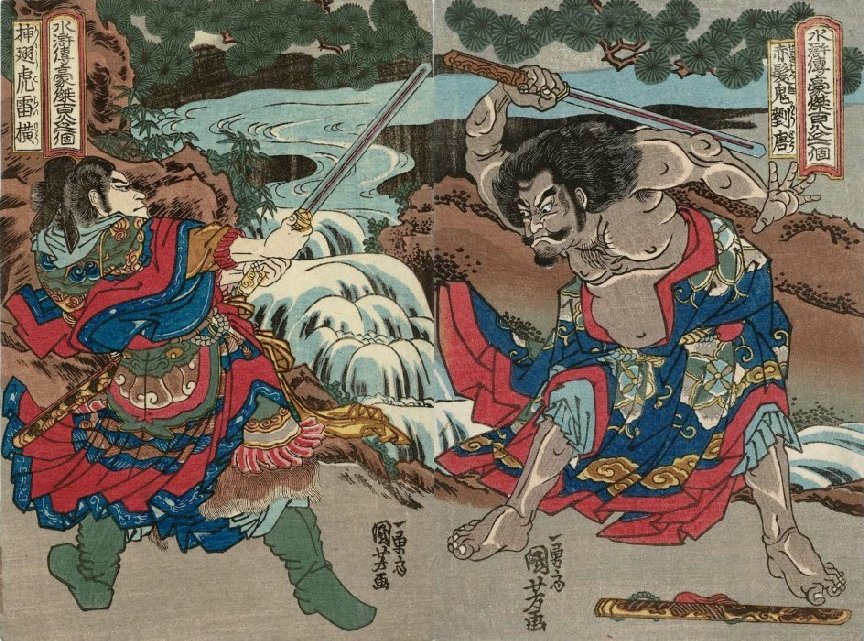
This series of prints is based on stories from the semi-historical Chinese novel, Suikoden (Shuihu zhuan in Chinese). It tells of the adventures of a band of 108 rebels who sought refuge in the margins of Liangshan Marsh. These rebel warriors sought to protect the poor and downtrodden, very much like Robin Hood’s band. Some of the designs in this series are smaller versions of prints in Kuniyoshi’s “great” Suikoden series. The censor for the 1830 edition was Mera Ta’ichirô, and the censor for the 1842 edition was Murata Sahei. The prints in this series are each about 10 by 7 inches (25 by 18 centimeters), a size known as chûban. I am grateful to Robert Pryor for assisting with this series. |
|
|
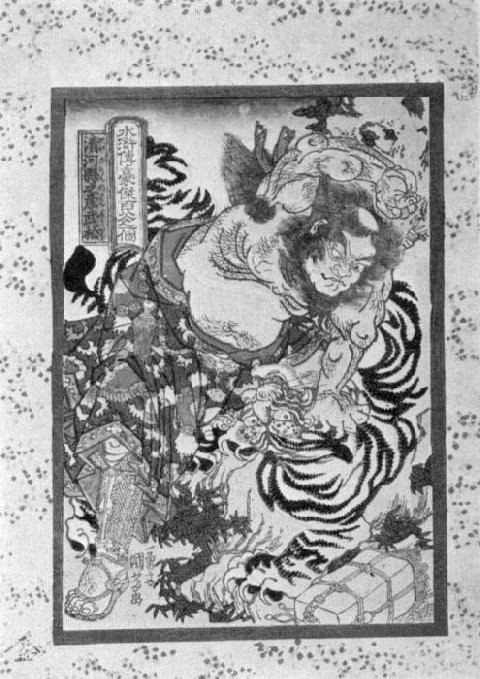
Japanese name: Gyôja Bushô of Seikaken (清河縣之産武松) Chinese name: Wu Song Scene: Gyôja Bushô, brown-skinned and
half-naked, killing a tiger with his bare hands at Keiyô
Hill Robinson: S2a.1 Censors’ seal: Not legible Publisher’s seal: Yamazaki Kimbei |
||||||||||||
|
|
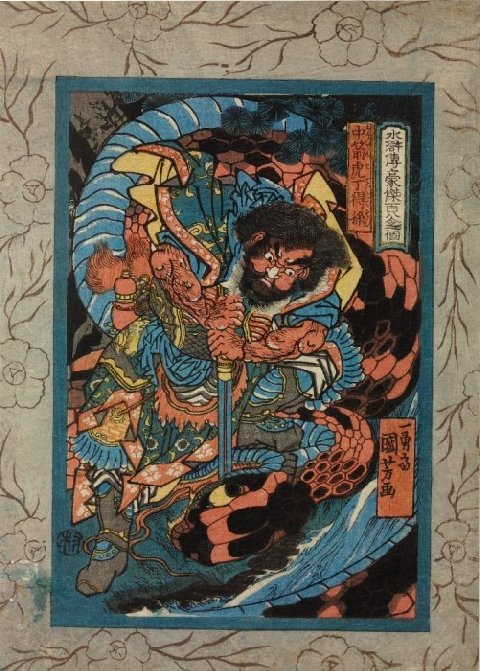
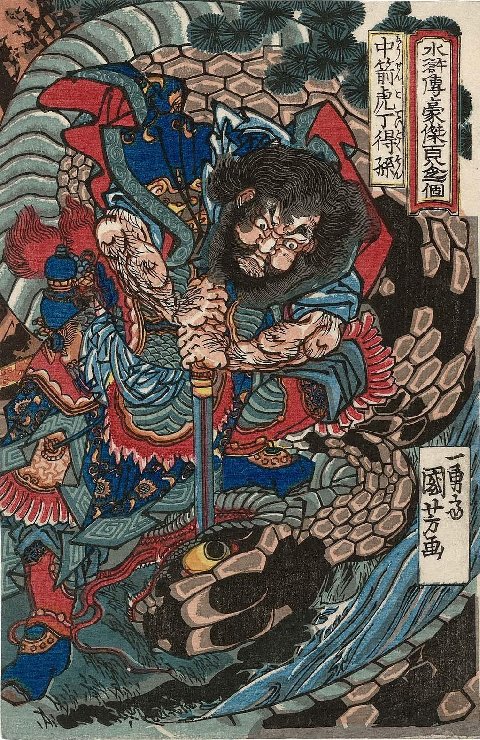
Japanese name: Chûsenko Teitokuson (中箭虎丁得孫) Chinese name: Ding Desun (Arrow-shot Tiger Ding Desun) Scene: The hero
fighting off a giant poisonous snake Robinson: S2a.2 Censors’ seal: Murata Sahei Publisher’s seal: Unidentified |
||||||||||||
|
|
The border was cut off the illustrated print of another state of
the above design, with uncolored cartouches. |
||||||||||||
|
|
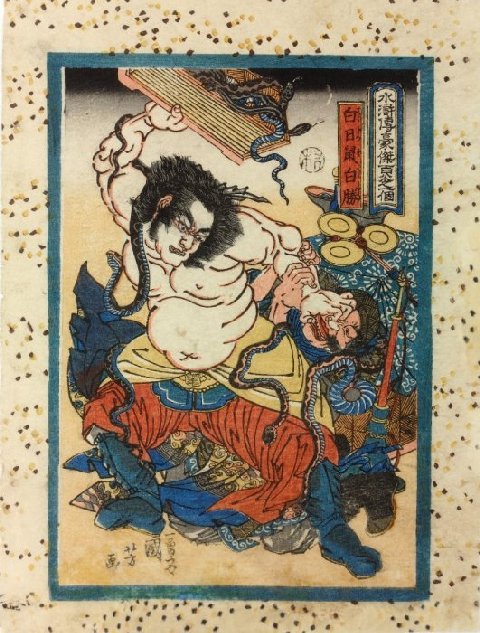
Japanese name: Hakujisso Hakushô (白日鼠白勝) Chinese name: Bai Sheng
(Daylight Rat Bai Sheng) Scene: Hakujisso Hakushô, half-naked, lifting
a box of snakes above a foe with whom he is struggling. Robinson: S2a.3 Censors’ seal: Murata Sahei Publisher’s seal: None |
||||||||||||
|
|
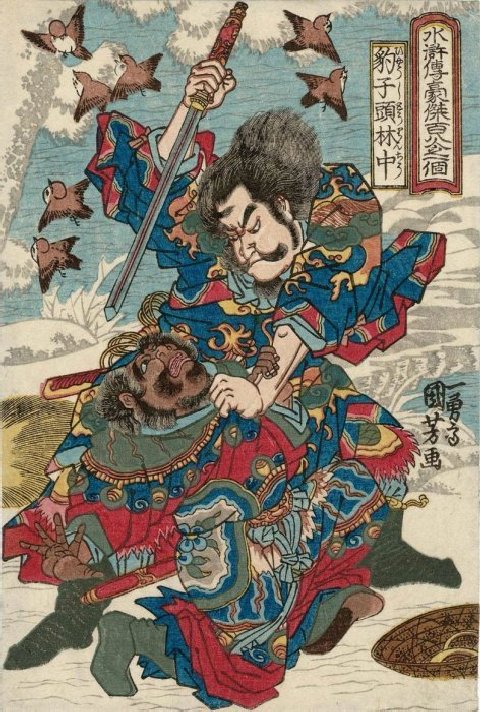
Japanese
name:
Hyôshitô Rinchû (豹子頭林中) Chinese name: Lin Chong Scene: Hyôshitô Rinchû about to thrust
his sword into a kneeling dark-skinned foe in the snow Robinson: S2a.4 Censors’ seal: Publisher’s seal: The border was cut off the illustrated print. |
||||||||||||
|
|
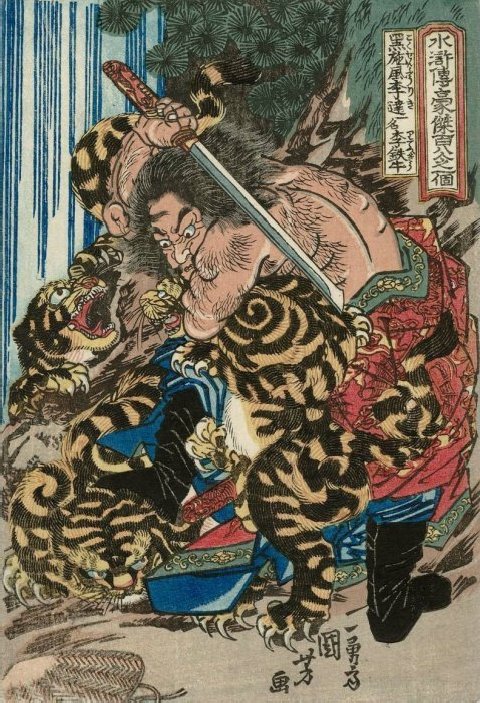
Japanese names: Kokusempû Riki (黒旋風李逵), who is also known
as Ritetsu Gyu (李铁牛) Chinese name: Li Kui Scene: Kokusempû Riki by a waterfall with a sword in hand
fighting three tigers Robinson: S2a.5 Censors’ seal: Publisher’s seal: The border was cut off the illustrated print. |
||||||||||||
|
|
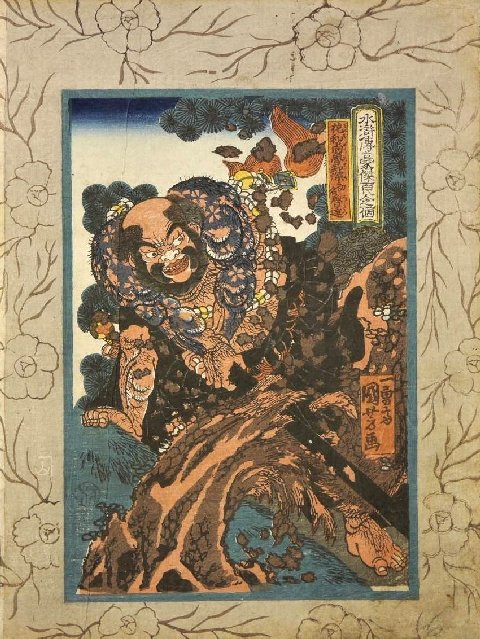
Japanese name:
Kwaoshô Rochishin (花和尚魯智深魯達) Chinese name: Lu Da or Lu Zhishen Scene: Kaoshô Rochishin (formerly
called “Rotatsu”) is a monk turned
brigand. He is smashing through a pine trunk with his great iron
club to intimidate guards escorting Lin Chong into exile. Robinson: S2a.6 Censors’ seal: Murata Sahei Publisher’s seal: Unidentified |
||||||||||||
|
|
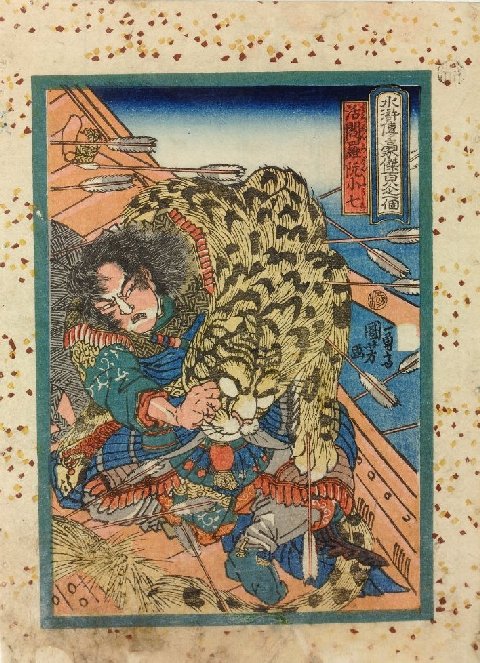
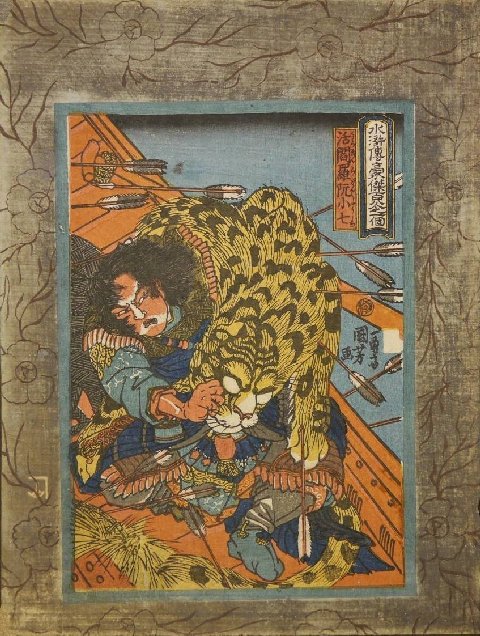
Japanese name: Kwatsuyenra Genshôshichi (活閽羅阮小七) Chinese name: Ruan Xiaoqi
(Living King Yama Ruan Xiaoqi) Scene: The hero in a
boat using a tiger skin as a shield against flying arrows Robinson: S2a.7 Censors’ seal: Murata Sahei and kiwame Publisher’s seal: None |
||||||||||||
|
|
Another state of the above design with an unidentified
publisher’s seal, the seal of the censor Murata Sahei,
and the kiwame seal |
||||||||||||
|
|
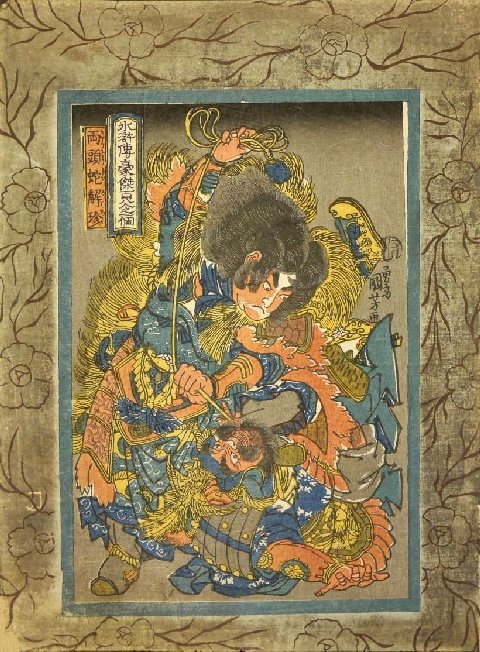
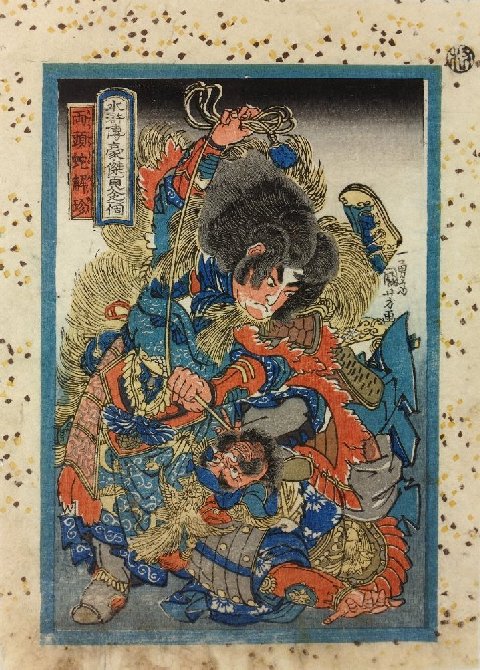
Japanese name: Ryôtôja Kaichin (両頭蛇解珍) Chinese name: Xie Zhen
(Double Headed Snake Xie Zhen) Scene: The hero
binding a fallen enemy general with a corded missile Robinson: S2a.8 Censors’ seal: Murata Sahei Publisher’s seal: Unidentified |
||||||||||||
|
|
Another state of the above design with a different border
pattern, no publisher’s seal, and the censor’s seal in a different location |
||||||||||||
|
No image available |
Japanese name:
Ryûchitaisai Genshôji (立地太歲阮小二) Chinese name: Ruan Xiao’er Scene: Robinson: S2a.9 Censors’ seal: Publisher’s seal: |
||||||||||||
|
In ukiyo-e, it is not unusual to encounter a series of single-sheet
prints, only a few of which form larger compositions when joined. If the prints are well designed, each panel
is artistically pleasing in isolation.
The borders were cut off the illustrated prints. |
|||||||||||||
|
|
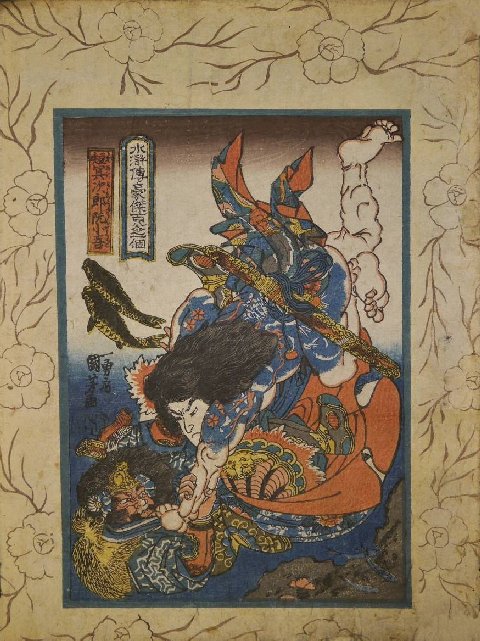
Japanese name:
Tammeijirô Genshôgo (短冥次郎阮小吾)
Chinese name: Ruan Xiaowu Scene: Tammeijirô Genshôgo,
bare-chested and tattooed, grappling with an armored foe under water Robinson: S2a.12 Censors’ seal: Murata Sahei Publisher’s seal: None |
||||||||||||
|
|
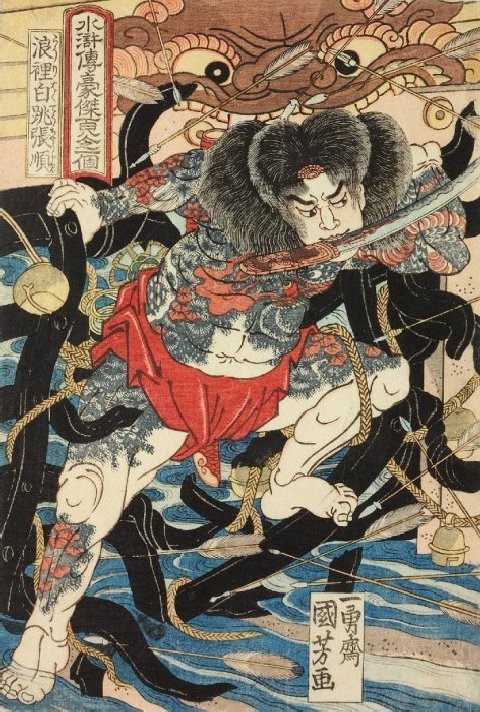
Japanese name:
Rôrihakuchô Chôjun (浪裡白跳張順)
Chinese name: Zhang Shun
(White Streak in the Waves Zhang Shun) Scene: Rôrihakuchô
Chôjun with a sword between his teeth wrenches
apart the bars of a water gate Robinson: Not listed The border was cut off the illustrated print. |
||||||||||||
|
|
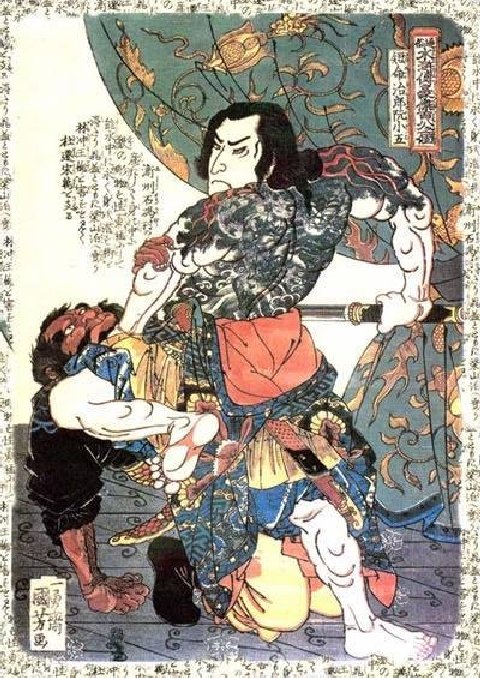
Japanese name: Tammeijirô Genshôgo (短命治郎阮小五) Chinese name: Du Qian Scene: Tammeijirô Genshôgo,
bare-chested and tattooed, kneels on a fallen foe, a drawn sword in his hand Robinson: Not listed This print bears some similarities to the above series. |
||||||||||||
|
|||||||||||||


|
“Robinson” refers to listing in Kuniyoshi: The Warrior-Prints by Basil William Robinson (Cornell University Press, Ithaca, NY, 1982) and its privately published supplement. CLICK HERE TO RETURN TO MAIN
PAGE
|